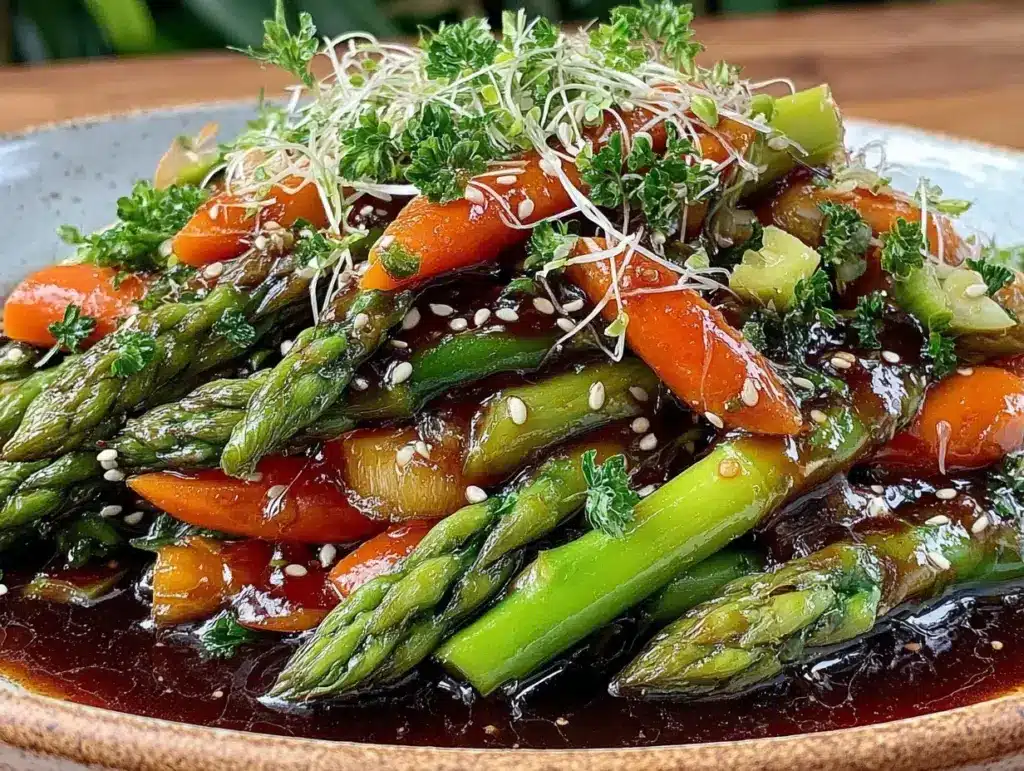
“I never thought a quick trip to the farmer’s market on a Wednesday afternoon would lead me to this,” I said, balancing a basket overflowing with crisp asparagus, snap peas, and radishes. Honestly, I was just trying to find something fresh to brighten up a busy weeknight dinner. The smell of freshly picked ginger in that tiny stall caught my attention, and before I knew it, I was chatting with a local grower who swore by a simple ginger sauce for stir-fries. I didn’t expect much—the recipe was scribbled hastily on a folded scrap of paper, nearly lost in my purse. But you know what? It turned out to be one of the most refreshing and vibrant dishes I’ve made this season.
That day, I almost forgot to pick up the soy sauce, and my kitchen ended up looking like a mini vegetable explosion (you know the kind—little peas rolling under the fridge, carrot shreds on the floor). Yet, every time I make this fresh spring vegetable stir-fry with ginger sauce, it reminds me of that unexpected delight. Maybe you’ve been there—wanting something fast, healthy, and flavorful that just feels like spring on a plate. This recipe does just that, with crisp veggies kissed by a zesty, warming ginger sauce that wakes up your taste buds without weighing you down.
Whether you’re a seasoned stir-fry fan or just looking for a way to celebrate spring’s bounty, this dish is like a breath of fresh air. It’s light, colorful, and honestly, pretty forgiving if you swap in whatever green goodness you find at the market. I keep making it because it’s simple, satisfying, and reminds me that sometimes, the best recipes come from the most unexpected places.
Why You’ll Love This Recipe
After testing this fresh spring vegetable stir-fry with ginger sauce several times, I can say it’s a keeper for many reasons. It’s not just a dish; it’s a reliable solution when you want something wholesome and quick without sacrificing flavor. Let me share why this recipe stands out:
- Quick & Easy: Ready in about 25 minutes from start to finish, perfect for those busy evenings when you want dinner on the table fast.
- Simple Ingredients: No need to hunt down exotic items; the veggies and pantry staples are likely already in your kitchen or local market.
- Perfect for Spring: Showcases the best of the season’s fresh vegetables, making the most of natural flavors and textures.
- Crowd-Pleaser: The ginger sauce adds just the right zing to make everyone at the table ask for seconds.
- Unbelievably Delicious: The crisp-tender veggies combined with a vibrant, slightly sweet, and spicy sauce create a satisfying harmony of flavors.
What makes this recipe different? It’s the ginger sauce—a blend of fresh ginger, garlic, and a touch of honey that brings the whole dish alive. I learned to finely grate the ginger to avoid chunks and balance the sauce perfectly with rice vinegar and soy sauce for a subtle tang. Honestly, it’s the kind of stir-fry that feels light and healthy but leaves you feeling fully satisfied. It’s a refreshing spin on the usual, something that’s as good for your mood as it is for your body.
What Ingredients You Will Need
This recipe uses simple, wholesome ingredients to deliver bold flavor and satisfying texture without the fuss. Most are pantry staples or easy to find fresh at spring markets. Feel free to swap or add your favorite seasonal veggies!
- For the Vegetable Stir-Fry:
- 1 cup asparagus, trimmed and cut into 2-inch pieces
- 1 cup sugar snap peas, ends trimmed
- 1 cup baby carrots, sliced thinly on the diagonal
- 1 cup radishes, halved or quartered if large (adds a nice peppery crunch)
- 1 small red bell pepper, thinly sliced (for color and sweetness)
- 3 green onions, sliced (white and green parts separated)
- 2 tablespoons vegetable oil (I like grapeseed for high heat)
- For the Ginger Sauce:
- 2 tablespoons fresh ginger, finely grated (fresh is key here—look for firm roots)
- 3 garlic cloves, minced
- 2 tablespoons soy sauce (low sodium if preferred; Kikkoman is a reliable brand)
- 1 tablespoon rice vinegar (adds brightness)
- 1 teaspoon honey or maple syrup (balances the tang)
- 1 teaspoon toasted sesame oil (for that nutty finish)
- Optional: 1/2 teaspoon red chili flakes (if you like a little heat)
Substitution tips: Use tamari instead of soy sauce for gluten-free. Swap honey for agave or maple syrup to keep it vegan. And if you want a little crunch, toss in some toasted cashews or sliced almonds at the end.
Equipment Needed
- A large non-stick or well-seasoned wok (ideal for high heat and quick cooking)
- Sharp knife and cutting board (for precise veggie prep)
- Microplane or fine grater (for fresh ginger and garlic)
- Measuring spoons and cups
- Mixing bowl (to whisk together the ginger sauce)
- Spatula or wooden spoon (for tossing veggies easily)
If you don’t have a wok, a large skillet works just fine—just make sure it can handle some high heat without sticking. I’ve tried cast iron for this recipe, and while it’s great for heat retention, it sometimes holds onto the garlic bits too much, so non-stick wins for quick cleanup. For grating ginger, a microplane really makes the job effortless and keeps the ginger silky rather than chunky.
Preparation Method
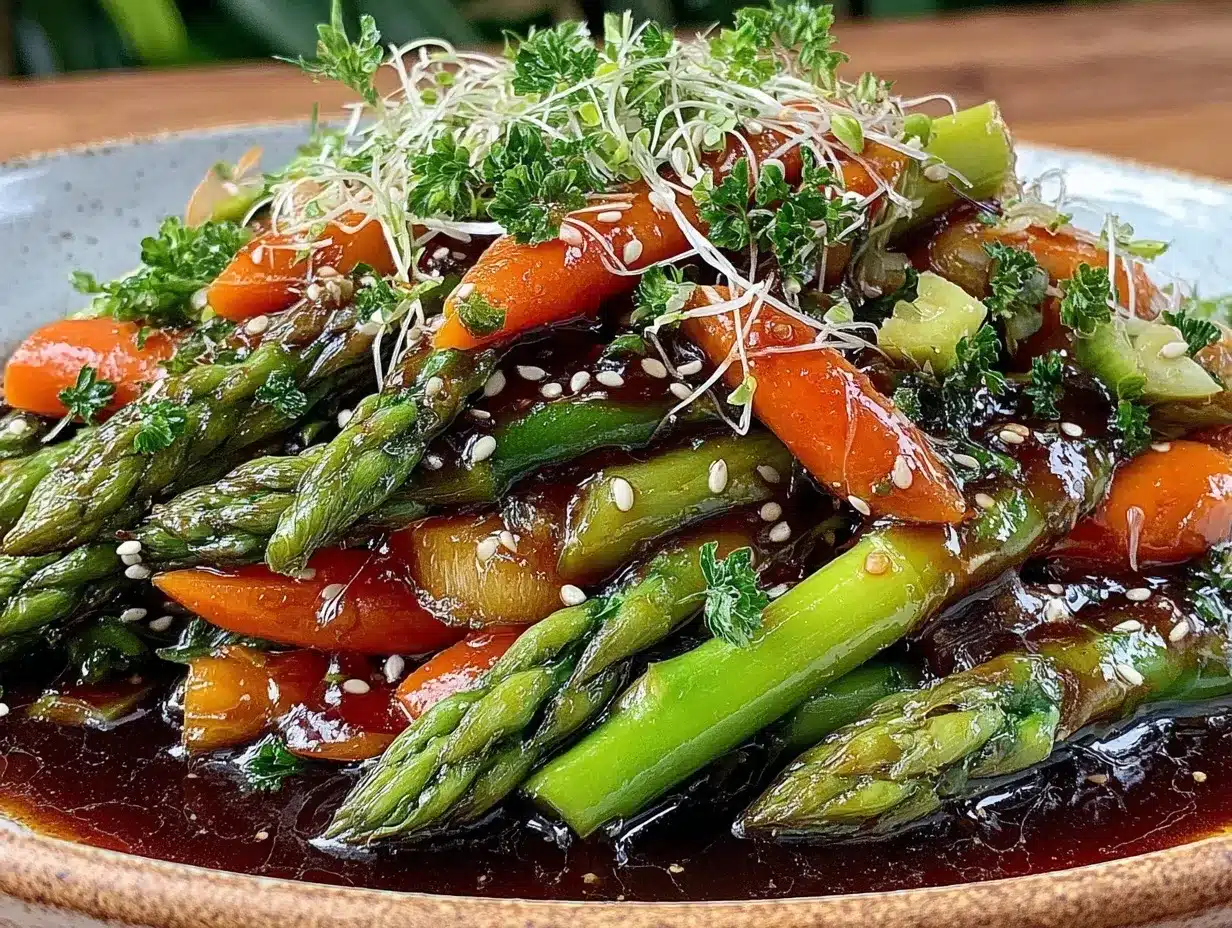
- Prep Your Veggies (10 minutes): Wash and trim asparagus and snap peas. Slice carrots thin on the diagonal for quicker cooking. Halve radishes and thinly slice red bell pepper and green onions, keeping white and green parts separate. The key is uniform pieces so they cook evenly.
- Make the Ginger Sauce (5 minutes): In a small bowl, whisk together grated ginger, minced garlic, soy sauce, rice vinegar, honey, toasted sesame oil, and red chili flakes (if using). Taste and adjust sweetness or tang as you prefer. This sauce is your flavor powerhouse, so don’t skip this step.
- Heat the Wok or Skillet (2 minutes): Add vegetable oil over medium-high heat until shimmering but not smoking. The oil should coat the pan for quick, even cooking.
- Cook the Aromatics (1 minute): Toss in the white parts of green onions and stir-fry for about 30 seconds until fragrant. Be careful not to burn the garlic mixed in the sauce if you add it now—better to add the sauce later.
- Stir-Fry the Vegetables (5-6 minutes): Add the carrots first since they take longest. After 2 minutes, add asparagus and bell pepper, stir-frying for another 2 minutes. Finally, add snap peas and radishes. Stir often but gently, so veggies stay crisp-tender and vibrant. You want them cooked but still with a fresh snap—think bright colors and a little crunch.
- Add the Sauce (2 minutes): Pour the ginger sauce over the veggies, tossing quickly to coat everything evenly. Cook for an additional 1-2 minutes, letting the sauce thicken slightly and cling to the vegetables.
- Finish and Serve (1 minute): Stir in the green parts of the sliced green onions for a fresh pop of color and mild onion flavor. Remove from heat immediately to avoid overcooking.
Tips: If your veggies start releasing too much water, give the pan a quick high-heat blast to evaporate excess moisture. Also, avoid overcrowding the pan; if needed, cook in batches to keep veggies crisp.
Cooking Tips & Techniques
When it comes to stir-frying, timing and heat are everything. You want the pan hot enough to cook quickly but not so hot that the veggies scorch. I learned the hard way that rushing this step results in limp, soggy veggies—no one wants that.
Always prep your ingredients fully before turning on the heat. Stir-frying moves fast, and chopping on the fly can lead to uneven cooking. Use a sharp knife to get clean cuts that cook evenly.
The ginger sauce is a game-changer here. Fresh grated ginger has a brightness you just can’t get from powdered. If you’re in a pinch, frozen grated ginger works, but fresh is worth the extra effort. Also, balance the sauce’s salty, sweet, and tangy notes carefully; too much soy sauce can overpower the delicate veggies.
Don’t add the sauce too early—wait until the veggies are nearly cooked to keep the flavors vibrant and prevent the garlic from burning. Tossing in the green onion tops at the end adds a fresh finish and a slight crunch.
If you want a little more texture, sprinkle toasted sesame seeds or chopped nuts when serving. It adds a pleasant contrast and makes the dish feel a bit more special without extra fuss.
Variations & Adaptations
One of the best things about this stir-fry is how adaptable it is! Here are a few ways I’ve switched it up, depending on what’s in season or what I’m craving:
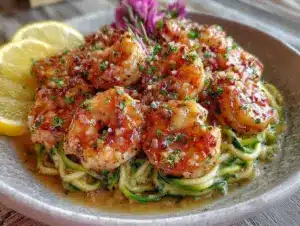
- Protein Boost: Add sliced chicken breast, tofu, or shrimp. Cook the protein first, then set aside while you stir-fry the veggies. Toss everything together with the sauce at the end.
- Seasonal Spin: Swap spring veggies for summer favorites like zucchini, cherry tomatoes, or fresh corn. Just adjust cooking times accordingly to keep veggies crisp.
- Spice It Up: Add fresh sliced chili or a splash of chili oil for a hotter kick. For milder palates, leave out the chili flakes and add a squeeze of fresh lime instead.
- Gluten-Free & Vegan: Use tamari or coconut aminos instead of soy sauce, and replace honey with maple syrup or agave.
- Personal Twist: I once tossed in some chopped fresh mint at the end for a surprising cool note that balanced the ginger’s heat beautifully. It was unexpected but delightful.
Serving & Storage Suggestions
This fresh spring vegetable stir-fry with ginger sauce is best served immediately while veggies are still crisp and the sauce is vibrant. Serve it over steamed jasmine rice or quinoa for a light yet filling meal. A side of crispy spring rolls or a simple miso soup pairs nicely to round out the meal.
If you have leftovers, store them in an airtight container in the refrigerator for up to 2 days. When reheating, do so gently in a skillet over medium heat or in the microwave at medium power to avoid overcooking. Adding a splash of water or a few drops of soy sauce during reheating can help revive the sauce’s flavor and keep the veggies from drying out.
Flavors tend to mellow a bit overnight, which some people enjoy as a more mellow taste. Just keep in mind the veggies won’t be quite as crisp the next day, so if texture is key for you, fresh is best.
Nutritional Information & Benefits
This dish is naturally low in calories and packed with nutrients, making it a smart choice for a healthy lifestyle. The fresh spring vegetables provide a good dose of fiber, vitamins A and C, and antioxidants. Ginger has well-known anti-inflammatory properties and aids digestion, which makes this sauce not only tasty but beneficial.
At roughly 180-220 calories per serving (without rice), it’s light but satisfying, featuring a balance of carbs, fiber, and healthy fats. It’s gluten-free if you choose tamari and vegan when swapping honey for plant-based sweeteners.
For those watching sodium, opt for low-sodium soy sauce and adjust the amount to taste. Overall, it’s a nourishing way to enjoy fresh produce while keeping meals vibrant and flavorful.
Conclusion
This fresh spring vegetable stir-fry with ginger sauce isn’t just another weeknight meal; it’s a celebration of seasonal produce and simple, honest flavors. I love how it brings brightness to the table with minimal effort and maximum taste. Give it a try, and don’t be afraid to make it your own—swap veggies, add your favorite proteins, or turn up the heat.
I’d love to hear how your version turns out! Drop a comment, share your tweaks, or even just say hi. This recipe has a way of sparking creativity in the kitchen, and honestly, that’s why I keep coming back to it—because it feels like springtime happiness on a plate, anytime I need it.
Happy cooking!
FAQs
Can I use frozen vegetables for this stir-fry?
Frozen veggies can work in a pinch, but they tend to release more water and might get mushy. If you do use frozen, thaw and drain them well, then stir-fry quickly over high heat to keep some crispness.
What can I serve with this fresh spring vegetable stir-fry?
It’s great with steamed jasmine rice, quinoa, or even noodles. For sides, try a light soup or spring rolls to complement the fresh flavors.
How do I store leftovers and reheat without losing crunch?
Store leftovers in an airtight container in the fridge for up to 2 days. Reheat gently in a skillet over medium heat or microwave at medium power with a splash of water to keep veggies from drying out.
Can I make the ginger sauce ahead of time?
Absolutely! The ginger sauce can be mixed up to 2 days in advance and stored in the fridge. Give it a quick stir before using since ingredients may settle.
What if I don’t like spicy food—should I omit the chili flakes?
Yes, simply leave out the chili flakes or any spicy ingredients. The sauce will still be flavorful thanks to the ginger, garlic, and honey balance.
Pin This Recipe!
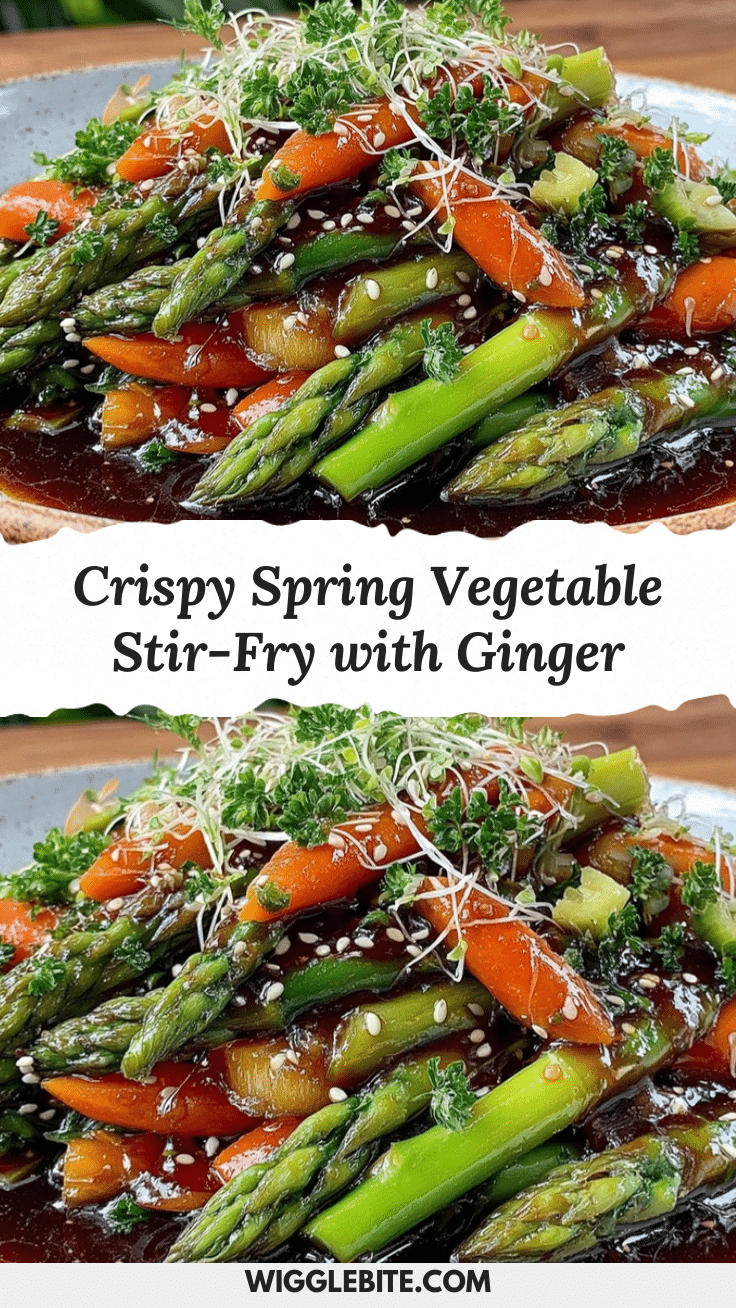
Fresh Spring Vegetable Stir-Fry with Ginger Sauce
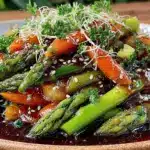
A quick, healthy, and vibrant stir-fry featuring crisp spring vegetables tossed in a zesty ginger sauce. Perfect for a light and flavorful weeknight meal.
- Prep Time: 10 minutes
- Cook Time: 15 minutes
- Total Time: 25 minutes
- Yield: 4 servings 1x
- Category: Main Course
- Cuisine: Asian
Ingredients
- 1 cup asparagus, trimmed and cut into 2-inch pieces
- 1 cup sugar snap peas, ends trimmed
- 1 cup baby carrots, sliced thinly on the diagonal
- 1 cup radishes, halved or quartered if large
- 1 small red bell pepper, thinly sliced
- 3 green onions, sliced (white and green parts separated)
- 2 tablespoons vegetable oil (grapeseed preferred)
- 2 tablespoons fresh ginger, finely grated
- 3 garlic cloves, minced
- 2 tablespoons soy sauce (low sodium preferred)
- 1 tablespoon rice vinegar
- 1 teaspoon honey or maple syrup
- 1 teaspoon toasted sesame oil
- Optional: 1/2 teaspoon red chili flakes
Instructions
- Wash and trim asparagus and snap peas. Slice carrots thin on the diagonal. Halve radishes and thinly slice red bell pepper and green onions, keeping white and green parts separate.
- In a small bowl, whisk together grated ginger, minced garlic, soy sauce, rice vinegar, honey, toasted sesame oil, and red chili flakes (if using). Adjust sweetness or tang to taste.
- Heat vegetable oil in a large wok or skillet over medium-high heat until shimmering but not smoking.
- Add the white parts of green onions and stir-fry for about 30 seconds until fragrant.
- Add carrots and stir-fry for 2 minutes. Then add asparagus and bell pepper, stir-frying for another 2 minutes.
- Add snap peas and radishes, stir-frying gently for 1-2 minutes until veggies are crisp-tender.
- Pour the ginger sauce over the vegetables, tossing quickly to coat evenly. Cook for 1-2 minutes until the sauce thickens slightly.
- Stir in the green parts of the sliced green onions. Remove from heat immediately and serve.
Notes
Use tamari instead of soy sauce for gluten-free. Replace honey with maple syrup or agave for vegan. Add toasted cashews or sliced almonds for crunch. Avoid overcrowding the pan; cook in batches if needed. Fresh grated ginger is preferred over powdered or frozen for best flavor. Reheat leftovers gently with a splash of water or soy sauce to maintain texture and flavor.
Nutrition
- Serving Size: 1 serving (approxima
- Calories: 200
- Sugar: 8
- Sodium: 600
- Fat: 9
- Saturated Fat: 1
- Carbohydrates: 22
- Fiber: 5
- Protein: 4
Keywords: spring vegetable stir-fry, ginger sauce, healthy stir-fry, quick dinner, vegetarian, vegan option, gluten-free option