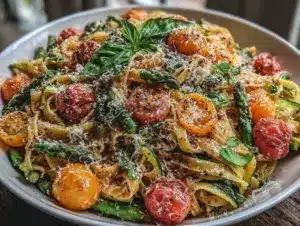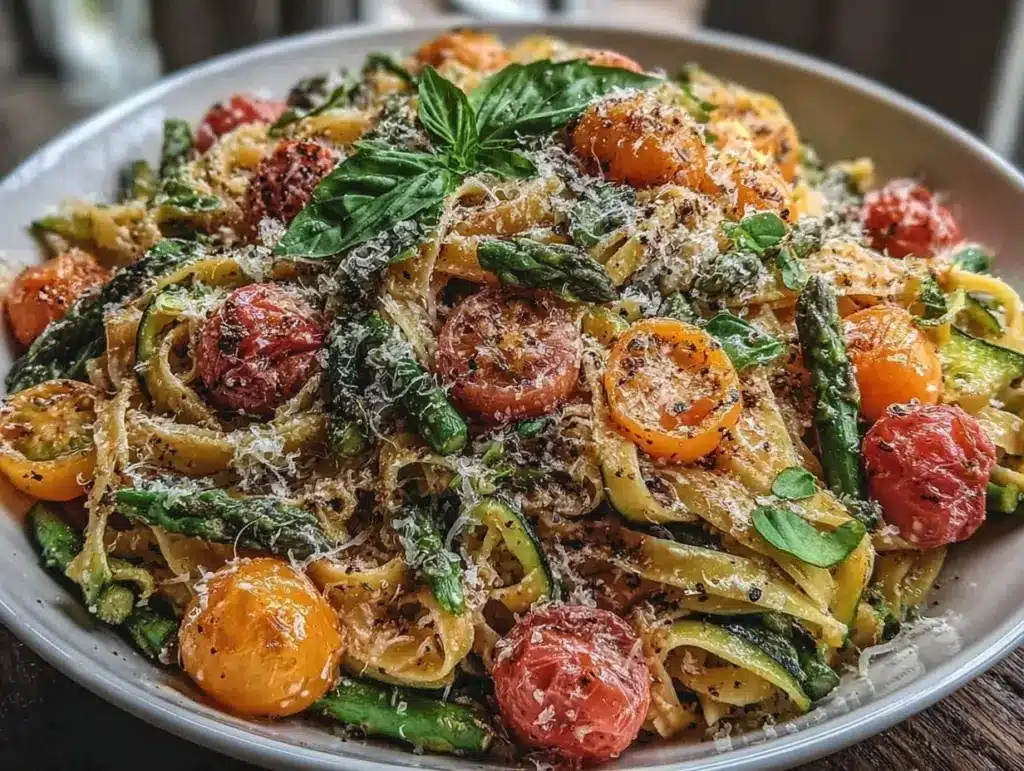
“You know that moment when you open the fridge and realize you only have odds and ends of veggies left? Well, last Thursday evening, I found myself staring at a sad collection of spring peas, asparagus tips, and baby carrots, totally unsure what to make. Honestly, I was aiming for a quick pasta dinner but wasn’t in the mood for the usual heavy sauces. Then my neighbor, Mrs. Greer, popped by with a cheeky smile and shared a simple trick her daughter swears by — toss everything fresh, bright, and barely cooked into pasta with garlic and Parmesan. I was skeptical, I admit, but I gave it a shot. The result? This Fresh Spring Vegetable Primavera with Garlic Parmesan that’s now my go-to on busy nights.
It wasn’t perfect at first — I forgot to salt the pasta water (rookie mistake!) and spilled half the Parmesan on the floor — but those little mishaps only made the dish feel more like home-cooked magic. Maybe you’ve been there, standing in the kitchen with a half-empty pantry wondering how to get dinner on the table without a fuss. This recipe is for that night when simplicity meets freshness, and honestly, the way those spring veggies pop against the garlicky, cheesy pasta is something that sticks with you.
What I love most is how this primavera captures the season’s best without fuss — vibrant greens, tender-crisp textures, and a sauce so simple it lets every ingredient shine. It’s not fancy, but it’s honest, comforting, and just the kind of meal that makes you close your eyes for a second after the first bite, thinking, “Yep, this is exactly what I needed tonight.”
Why You’ll Love This Recipe
After testing countless pasta dishes, this Fresh Spring Vegetable Primavera with Garlic Parmesan quickly earned a special spot in my weekly rotation. Here’s why it stands out:
- Quick & Easy: Ready in under 30 minutes, this dish suits those hectic weeknights or unexpected guest dinners.
- Simple Ingredients: Uses fresh seasonal veggies and pantry staples — no last-minute grocery runs required.
- Perfect for Spring: Highlights asparagus, peas, and fresh herbs that say “spring” with every bite.
- Crowd-Pleaser: My family, including picky eaters, always asks for seconds — the garlic and Parmesan combo is irresistible.
- Unbelievably Delicious: The texture balance between tender pasta and crisp veggies, with that creamy cheese coating, is pure comfort food.
This isn’t just another veggie pasta. The magic comes from lightly sautéing the vegetables so they keep their snap, mixing in garlic-infused olive oil, and finishing with freshly grated Parmesan. I recommend using a good-quality Parmesan like Parmigiano-Reggiano — it really makes a difference. Also, tossing the pasta with some of the starchy pasta water helps the sauce cling perfectly without being heavy or greasy. Honestly, it’s like a warm hug on a plate, and I can’t wait for you to try it in your kitchen.
What Ingredients You Will Need
This recipe uses simple, wholesome ingredients to deliver bold flavor and satisfying texture without the fuss. Most are pantry staples or fresh spring produce you can easily find at your local market.
- Pasta: 12 ounces (340 grams) spaghetti or fettuccine (I prefer Barilla for consistent texture)
- Asparagus: 1 bunch, trimmed and cut into 1-inch pieces (choose firm, bright green stalks)
- Fresh peas: 1 cup (shelled; frozen peas work in a pinch)
- Baby carrots: 1 cup, sliced thin (adds subtle sweetness and crunch)
- Garlic: 4 cloves, minced (fresh is best for that punch)
- Olive oil: 3 tablespoons (extra virgin for flavor)
- Parmesan cheese: 1 cup, freshly grated (Parmigiano-Reggiano recommended for depth)
- Lemon zest: From 1 lemon (brightens the dish beautifully)
- Fresh basil: A handful, torn (optional but highly recommended)
- Salt and pepper: To taste
- Red pepper flakes: A pinch (optional, for a subtle kick)
Ingredient tips: If asparagus is out of season, swap with zucchini ribbons or green beans. For a dairy-free version, use nutritional yeast instead of Parmesan and a plant-based olive oil spread. And if you like, toss in a handful of toasted pine nuts or slivered almonds for an extra layer of texture.
Equipment Needed
- Large pot for boiling pasta
- Colander for draining pasta and veggies
- Large sauté pan or skillet (preferably non-stick or stainless steel)
- Wooden spoon or spatula for stirring
- Microplane or fine grater for zesting lemon and grating Parmesan
- Measuring cups and spoons
- Knife and cutting board for prepping vegetables
If you don’t have a microplane, a small box grater works just fine for zest and cheese. For sautéing, I find a wide pan better to cook veggies evenly without overcrowding. And trust me, keeping a good wooden spoon handy makes stirring pasta and veggies way easier (plus, it lasts forever!). For budget-friendly options, a basic stainless steel pan and a sharp chef’s knife will do the job perfectly.
Preparation Method
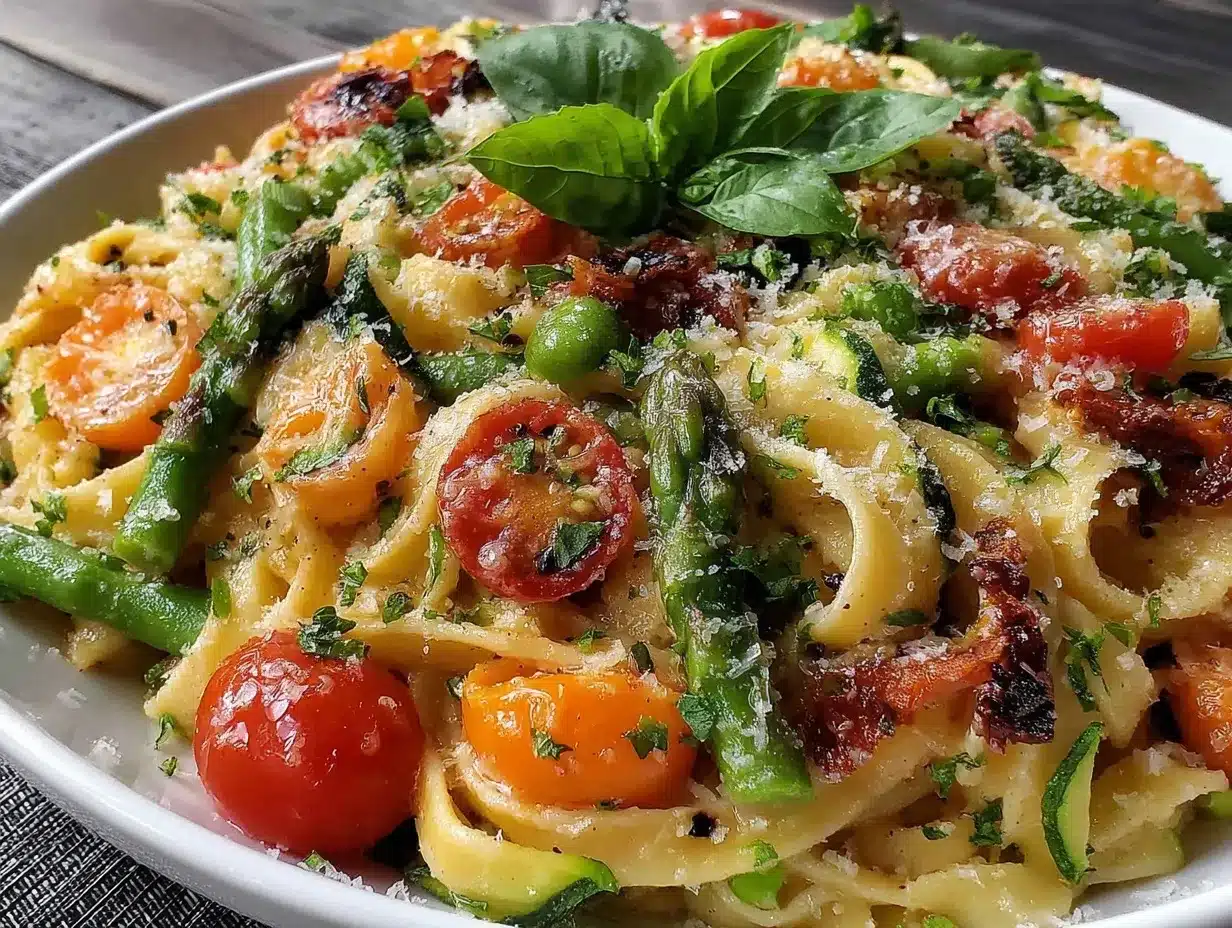
- Prep the vegetables: Trim and cut asparagus into 1-inch pieces, shell peas if fresh, and slice baby carrots thinly. Mince garlic finely to release maximum flavor. (About 10 minutes)
- Cook the pasta: Bring a large pot of salted water to a boil (use about 1 tablespoon of salt per 4 quarts/3.8 liters of water). Add 12 ounces (340 grams) pasta and cook until al dente — usually 8-10 minutes. Reserve 1 cup of the pasta cooking water before draining. (10 minutes)
- Blanch the vegetables: In the last 2 minutes of pasta cooking, add asparagus, peas, and carrots to the boiling pasta water. This keeps veggies bright and just tender. Drain pasta and veggies together in a colander. (2 minutes)
- Sauté garlic: While pasta cooks, heat 3 tablespoons olive oil in a large skillet over medium heat. Add minced garlic and cook for 1-2 minutes until fragrant but not browned — burning garlic is an easy mistake to avoid here! (2 minutes)
- Toss pasta and veggies: Add drained pasta and vegetables to the skillet with garlic oil. Pour in ½ cup of reserved pasta water and toss everything together gently over medium heat. The starchy water helps the sauce cling to pasta. (2-3 minutes)
- Add cheese and zest: Remove skillet from heat. Stir in 1 cup freshly grated Parmesan and lemon zest. Toss until cheese melts and coats pasta evenly. If mixture seems dry, add more pasta water, a tablespoon at a time. (2 minutes)
- Season and serve: Season with salt, freshly ground black pepper, and a pinch of red pepper flakes if using. Tear fresh basil over the top and give a final gentle toss. Serve immediately for best texture and flavor. (1-2 minutes)
Note: Keep an eye on the garlic—it can go from golden to bitter in seconds. Also, don’t overcook the veggies; they should still have a little snap. If you like, reserve a bit of Parmesan for sprinkling on top at the table.
Cooking Tips & Techniques
Getting this Fresh Spring Vegetable Primavera just right is mostly about timing and gentle handling. Here’s what I’ve learned after a dozen tries:
- Salt your pasta water well. It’s your first chance to season the dish deeply. I usually add about a tablespoon of salt per 4 quarts (3.8 liters) of water.
- Don’t overcook your veggies. Blanching them with the pasta water keeps them crisp-tender and bright. Overcooked asparagus or peas lose their charm fast.
- Use reserved pasta water. That starchy liquid is gold for making the sauce silky and helps the cheese stick without clumping.
- Be gentle when tossing. Pasta and veggies can break if you stir too vigorously. I use a wooden spoon and fold ingredients together with care.
- Freshly grated Parmesan is key. Pre-grated cheese won’t melt as smoothly and can taste chalky.
- Watch the garlic closely. Cook it low and slow to avoid bitterness. If using garlic powder as a last resort, add it at the end, not sautéed.
- Multitasking tip: Start prepping veggies while pasta water heats to save time. Also, set out all ingredients before cooking for smooth workflow.
Variations & Adaptations
Feeling creative or needing to tweak for dietary needs? Here are some ideas I’ve tried or recommend:
- Vegan version: Skip Parmesan and swap with nutritional yeast or a vegan cheese alternative. Add a tablespoon of vegan butter for richness.
- Protein boost: Toss in grilled chicken strips, sautéed shrimp, or crispy tofu cubes for a heartier meal.
- Seasonal swaps: When spring veggies are scarce, replace asparagus and peas with zucchini, broccoli florets, or snap peas.
- Gluten-free: Use gluten-free pasta varieties made from rice or corn. Cooking times may vary, so check package instructions.
- Spicy twist: Add more red pepper flakes or a dash of hot sauce for heat. I once added a pinch of smoked paprika for a smoky note that was surprisingly good!
Serving & Storage Suggestions
This Fresh Spring Vegetable Primavera tastes best served fresh and warm right off the stove. The brightness of the lemon zest and fresh basil really sings when the dish hasn’t cooled down. I like to plate it simply, maybe with a drizzle of extra virgin olive oil and a sprinkle of extra Parmesan for guests.
Pair it with a crisp white wine like Pinot Grigio or a chilled sparkling water with lemon for a refreshing balance. It also goes nicely alongside a light arugula salad or crusty bread to soak up any leftover garlic-Parmesan sauce.
If you have leftovers, store them in an airtight container in the fridge for up to 2 days. Reheat gently in a skillet over low heat, adding a splash of water or olive oil to loosen the sauce. Avoid microwaving straight as it can dry out the pasta and veggies.
One tip: the flavors meld beautifully overnight, so if you can resist, let it rest in the fridge and enjoy an even more harmonious dish the next day!
Nutritional Information & Benefits
This primavera recipe offers a light yet nourishing meal. Here’s an approximate nutrition breakdown per serving (serves 4):
| Nutrient | Amount |
|---|---|
| Calories | 350-400 kcal |
| Protein | 15g |
| Carbohydrates | 50g |
| Fat | 10g |
| Fiber | 5g |
The fresh asparagus and peas provide vitamins A and C, plus antioxidants that support immune health. Garlic adds natural anti-inflammatory properties, while Parmesan contributes calcium and protein. This dish can fit well into balanced diets and is naturally low in sugar. If gluten or dairy allergies are a concern, simple swaps make it accessible without losing charm.
Personally, I feel good serving something that’s both wholesome and satisfying — it’s a reminder that tasty food doesn’t need to be complicated or heavy.
Conclusion
This Fresh Spring Vegetable Primavera with Garlic Parmesan has become one of those recipes I turn to when I want dinner that feels both fresh and comforting — no fuss, just honest flavor. Whether you’re new to cooking with spring veggies or looking for a pasta that lets those bright flavors shine, this one delivers every time.
Don’t hesitate to make it your own: swap veggies, add protein, or adjust seasoning to your liking. Cooking should be fun, and this dish is proof that simple ingredients treated with care can be something special.
If you try this recipe, I’d love to hear how it turns out for you! Drop a comment below or share your own twists — I’m always eager to learn new takes. Here’s to fresh flavors and easy meals that brighten the weeknight table!
Frequently Asked Questions
Can I use frozen vegetables for this primavera?
Absolutely! Frozen peas and asparagus can work well — just thaw and drain them before adding. This helps avoid extra water in the dish.
What pasta shape works best for this recipe?
Long pasta like spaghetti or fettuccine works great because it holds the sauce and veggies nicely, but penne or farfalle are good alternatives if you prefer.
How can I make this dish vegan?
Skip the Parmesan and use nutritional yeast or a vegan cheese alternative. Adding vegan butter or olive oil boosts creaminess.
Is it okay to prepare this dish ahead of time?
Yes, you can prepare and refrigerate, but it’s best enjoyed the same day. Reheat gently to keep veggies crisp and pasta from drying out.
Can I add protein to make this a complete meal?
Definitely! Grilled chicken, shrimp, or crispy tofu are great additions to round out the meal.
Pin This Recipe!
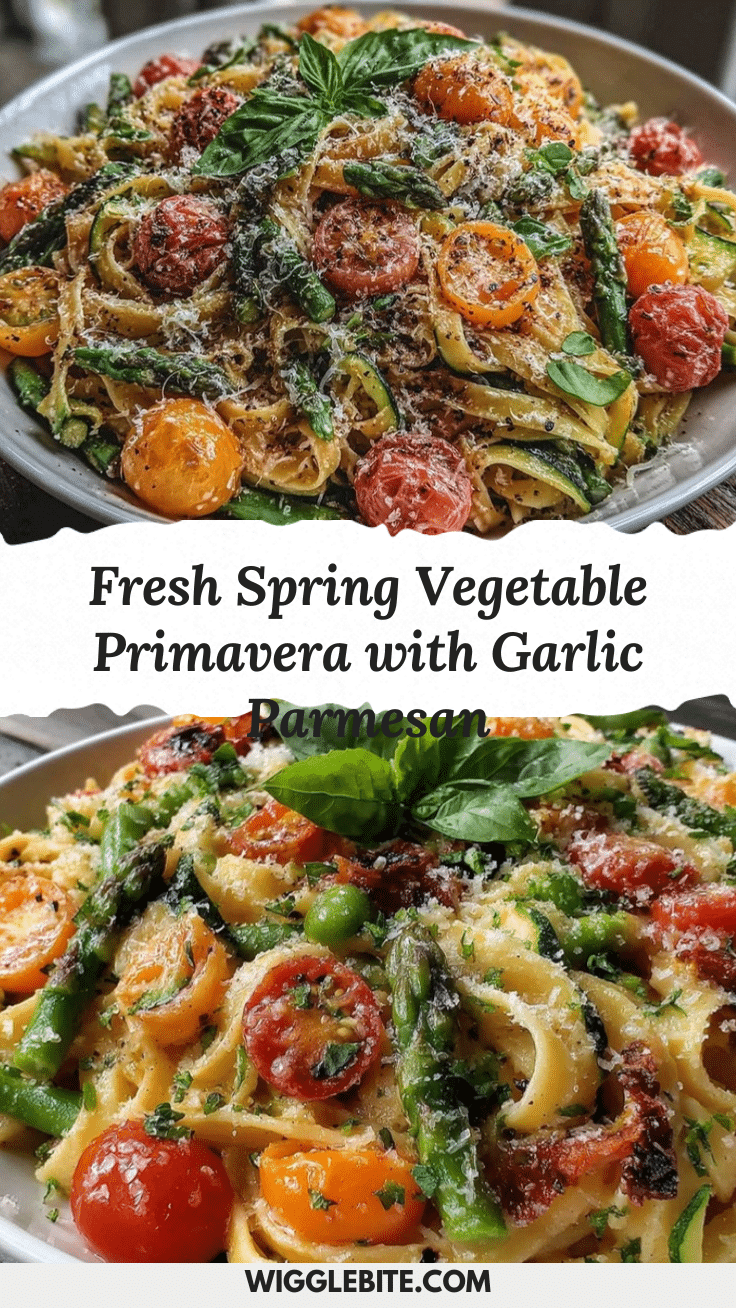
Fresh Spring Vegetable Primavera with Garlic Parmesan
A quick and easy pasta dish featuring fresh spring vegetables lightly sautéed and tossed with garlic-infused olive oil and freshly grated Parmesan cheese. Perfect for busy weeknights, this primavera highlights tender-crisp asparagus, peas, and baby carrots with a bright lemon zest finish.
- Prep Time: 10 minutes
- Cook Time: 15 minutes
- Total Time: 25 minutes
- Yield: 4 servings 1x
- Category: Main Course
- Cuisine: Italian
Ingredients
- 12 ounces (340 grams) spaghetti or fettuccine
- 1 bunch asparagus, trimmed and cut into 1-inch pieces
- 1 cup fresh peas (shelled; frozen peas work in a pinch)
- 1 cup baby carrots, sliced thin
- 4 cloves garlic, minced
- 3 tablespoons extra virgin olive oil
- 1 cup freshly grated Parmesan cheese (Parmigiano-Reggiano recommended)
- Zest from 1 lemon
- A handful fresh basil, torn (optional)
- Salt and pepper to taste
- Pinch of red pepper flakes (optional)
Instructions
- Prep the vegetables: Trim and cut asparagus into 1-inch pieces, shell peas if fresh, and slice baby carrots thinly. Mince garlic finely. (About 10 minutes)
- Cook the pasta: Bring a large pot of salted water to a boil (about 1 tablespoon salt per 4 quarts water). Add pasta and cook until al dente, about 8-10 minutes. Reserve 1 cup pasta cooking water before draining. (10 minutes)
- Blanch the vegetables: In the last 2 minutes of pasta cooking, add asparagus, peas, and carrots to the boiling pasta water. Drain pasta and veggies together in a colander. (2 minutes)
- Sauté garlic: Heat olive oil in a large skillet over medium heat. Add minced garlic and cook 1-2 minutes until fragrant but not browned. (2 minutes)
- Toss pasta and veggies: Add drained pasta and vegetables to skillet with garlic oil. Pour in ½ cup reserved pasta water and toss gently over medium heat. (2-3 minutes)
- Add cheese and zest: Remove skillet from heat. Stir in Parmesan and lemon zest. Toss until cheese melts and coats pasta evenly. Add more pasta water if needed. (2 minutes)
- Season and serve: Season with salt, pepper, and red pepper flakes if using. Tear fresh basil over top and toss gently. Serve immediately. (1-2 minutes)
Notes
Salt pasta water well to season the dish deeply. Avoid overcooking vegetables to keep them crisp-tender. Use reserved pasta water to help sauce cling to pasta. Cook garlic low and slow to avoid bitterness. Freshly grated Parmesan melts better than pre-grated. For dairy-free, substitute Parmesan with nutritional yeast and use plant-based butter. Leftovers keep well for up to 2 days refrigerated; reheat gently in skillet with splash of water or olive oil.
Nutrition
- Serving Size: 1 serving (about 1/4
- Calories: 375
- Sugar: 5
- Sodium: 350
- Fat: 10
- Saturated Fat: 3
- Carbohydrates: 50
- Fiber: 5
- Protein: 15
Keywords: spring vegetable primavera, garlic parmesan pasta, easy pasta recipe, quick dinner, fresh vegetables, asparagus pasta, peas, baby carrots, vegetarian pasta