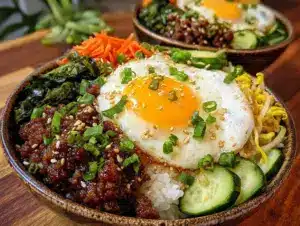
“You know that feeling when you’re starving after a long day, and the idea of cooking feels like climbing a mountain? Well, that Tuesday evening, I found myself exactly there—staring blankly into the fridge, hoping for a miracle. My neighbor, Mrs. Kim, was just returning from her grocery run and casually mentioned her favorite Korean ground beef bibimbap bowls. At first, I thought, ‘Ground beef? Korean flavors? In one bowl?’ Honestly, it sounded like a bit of a mismatch. But I was curious enough to give it a shot.
What happened next was surprising. The sizzle of the beef hitting the pan, the vibrant colors of fresh veggies, and that almost hypnotic blend of sweet, salty, and spicy flavors filling the kitchen—it all came together faster than I expected. I made a bit of a mess, dropping a cracked bowl mid-prep, but the taste was worth it. This easy flavor-packed Korean ground beef bibimbap bowl quickly became a go-to for quick weeknight dinners, especially when I’m short on time but craving something satisfying and wholesome.
Maybe you’ve been there too—wanting bold flavors without the fuss. This recipe isn’t just about putting ingredients together; it’s about capturing that perfect balance of textures and tastes in one bowl. Trust me, once you try it, you’ll want to keep making it, too.
Why You’ll Love This Recipe
Having tested countless bibimbap variations, this easy Korean ground beef bibimbap bowl stands out because it’s a perfect blend of speed, flavor, and simplicity. I’m not kidding when I say it’s been a lifesaver on busy nights.
- Quick & Easy: Ready in about 25 minutes—ideal for hectic weeknights or last-minute dinner plans.
- Simple Ingredients: Uses pantry staples and fresh veggies you likely already have handy.
- Perfect for Dinner or Lunch: Versatile enough for a cozy dinner or a satisfying lunch bowl.
- Crowd-Pleaser: The savory-sweet beef mix paired with crisp veggies always gets compliments from family and friends.
- Unbelievably Delicious: The combination of gochujang sauce, toasted sesame oil, and garlic makes every bite pop with authentic Korean flavor.
This recipe isn’t just another ground beef bowl—it’s my personal take that balances bold seasoning with fresh, crunchy toppings. The secret? Toasting the sesame seeds and adding a quick fried egg on top for that rich, creamy finish. Honestly, it hits all the right notes without any complicated steps.
Whether you’re new to Korean cuisine or a seasoned fan, this dish brings comfort and excitement to your table with minimal effort. Give it a whirl, and your taste buds will thank you.
What Ingredients You Will Need
This recipe uses simple, wholesome ingredients to deliver bold flavor and satisfying texture without the fuss. Most items are pantry staples, while the veggies add freshness and crunch. Feel free to customize with what’s in season or on hand!
- Ground beef: 1 pound (450g), preferably 80/20 for juiciness
- Soy sauce: 3 tablespoons (I like Kikkoman for the balanced flavor)
- Brown sugar: 2 tablespoons (balances the saltiness)
- Garlic: 3 cloves, minced (fresh is best for punchy aroma)
- Ginger: 1 teaspoon, freshly grated (adds warmth)
- Gochujang (Korean chili paste): 2 tablespoons (adjust to taste for heat)
- Sesame oil: 1 tablespoon (toasted, for that nutty depth)
- Cooked white rice: 4 cups (about 900g), preferably short grain for stickiness
- Julienned carrots: 1 cup (about 120g), fresh and crunchy
- Baby spinach: 2 cups (about 60g), lightly wilted
- Cucumber: 1 medium, thinly sliced (adds refreshing crunch)
- Green onions: 2 stalks, thinly sliced (for brightness)
- Eggs: 4 large (fried sunny-side up or to your liking)
- Toasted sesame seeds: 1 tablespoon (for garnish and texture)
- Vegetable oil: 1 tablespoon (for cooking eggs and beef)
Substitution tips: Use ground turkey or chicken for a lighter protein. Swap white rice with brown rice or cauliflower rice to suit your diet. If you can’t find gochujang, mix a bit of chili paste with miso for a similar umami kick.
Equipment Needed
- Large non-stick skillet or frying pan – I prefer one with a heavy bottom for even cooking
- Medium saucepan to cook rice (or a rice cooker if you have one)
- Mixing bowl for marinating the beef
- Sharp knife and cutting board for prepping veggies
- Spatula or wooden spoon for stirring the beef
- Small bowl for whisking eggs (optional)
If you don’t have a rice cooker, no worries—a heavy saucepan with a tight lid works just fine. I’ve also used cast iron pans for cooking the beef, which helps get a nice sear. For budget-friendly options, a good-quality non-stick skillet is a must-have and can last years with proper care.
Preparation Method
- Cook the rice: Rinse 2 cups (450g) of short-grain white rice under cold water until the water runs clear. Add rice and 2 1/4 cups (540ml) water to a saucepan, bring to a boil over medium heat, then reduce to low, cover, and simmer for 15 minutes. Remove from heat and let sit, covered, for 10 minutes. Fluff with a fork.
- Prepare the marinade for the beef: In a mixing bowl, combine 3 tablespoons soy sauce, 2 tablespoons brown sugar, minced garlic, grated ginger, 2 tablespoons gochujang, and 1 tablespoon toasted sesame oil. Stir well.
- Marinate the ground beef: Add 1 pound (450g) ground beef to the marinade, mixing thoroughly with your hands or a spoon. Let it sit for 10 minutes to absorb flavors.
- Cook the beef: Heat 1 tablespoon vegetable oil in a large skillet over medium-high heat. Add marinated beef, breaking it apart with a spatula. Cook for 6-8 minutes, until browned and cooked through. Stir occasionally to prevent sticking. If the mixture looks dry, add a splash of water.
- Prepare the vegetables: While beef cooks, julienne the carrots, slice the cucumber, and thinly slice green onions. Quickly wilt the spinach in a hot pan for 1-2 minutes or until just softened. Set all veggies aside.
- Fry the eggs: In a separate small skillet, heat a little vegetable oil over medium heat. Crack in 4 eggs and fry sunny-side up or to your preference. The runny yolk adds a lovely creaminess to the bowl.
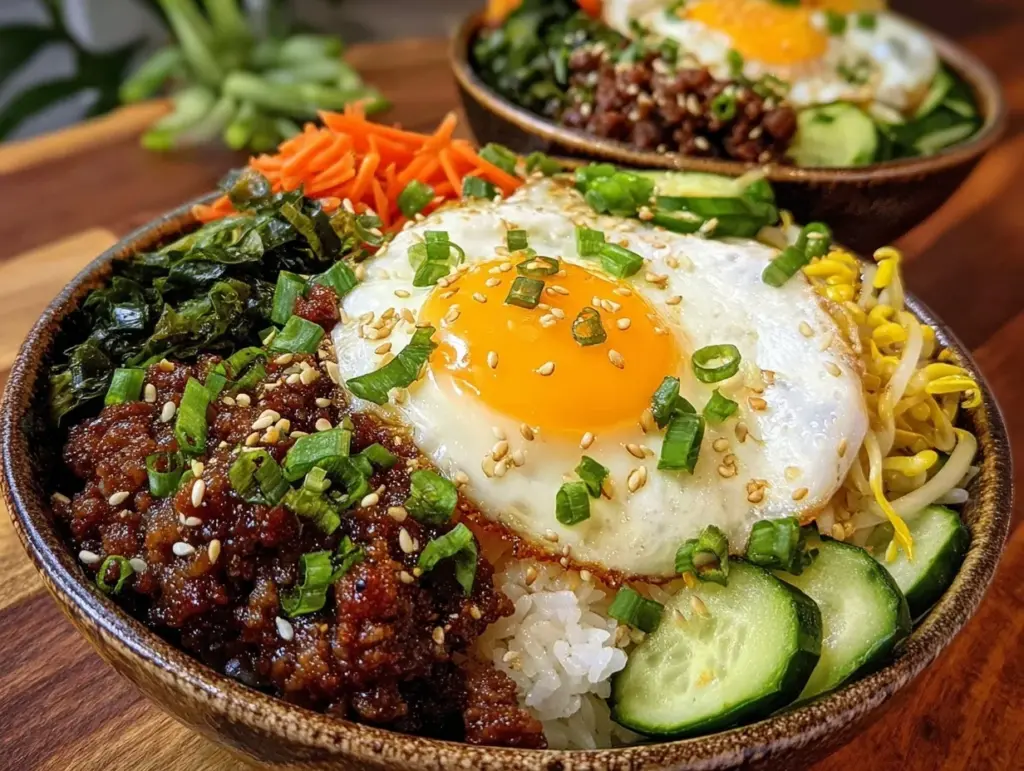
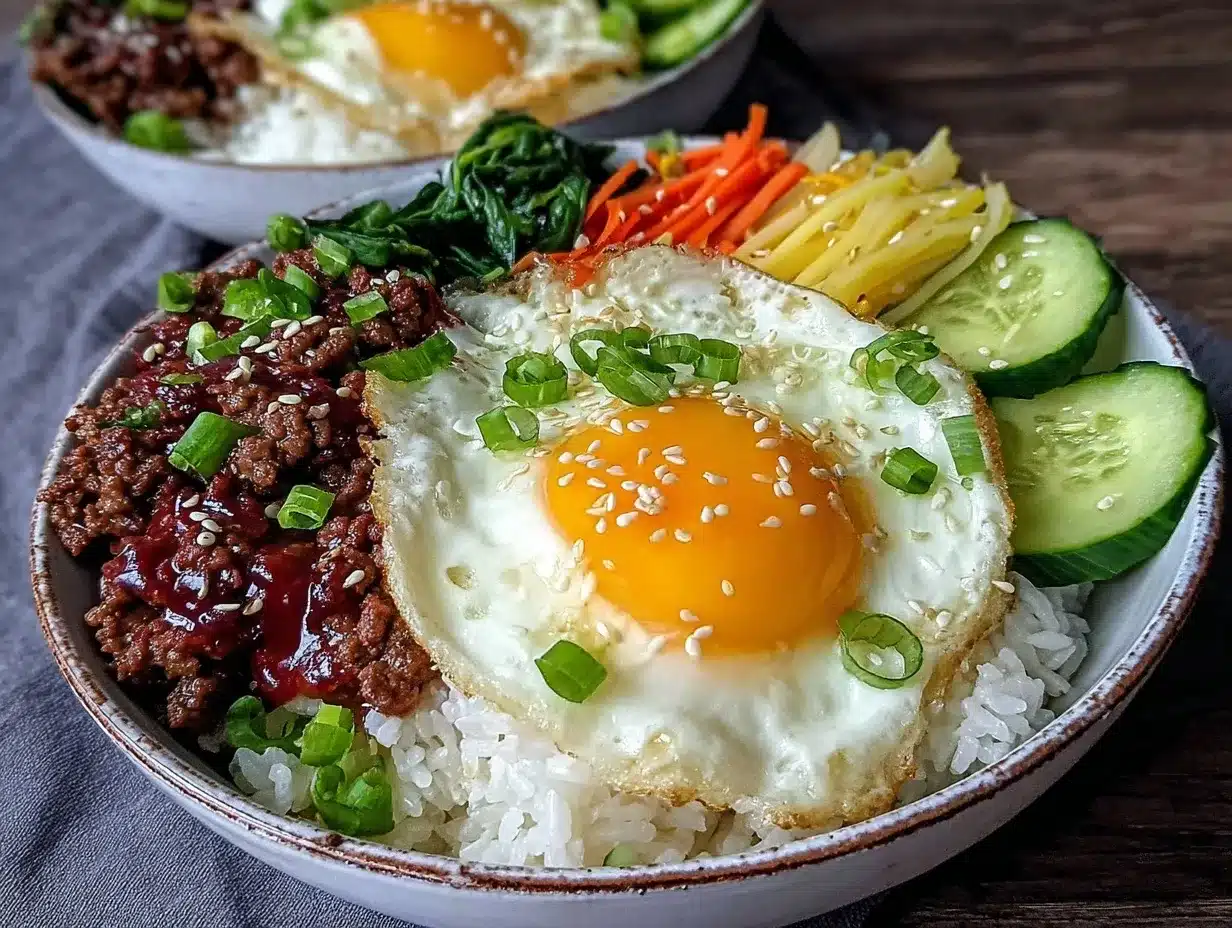
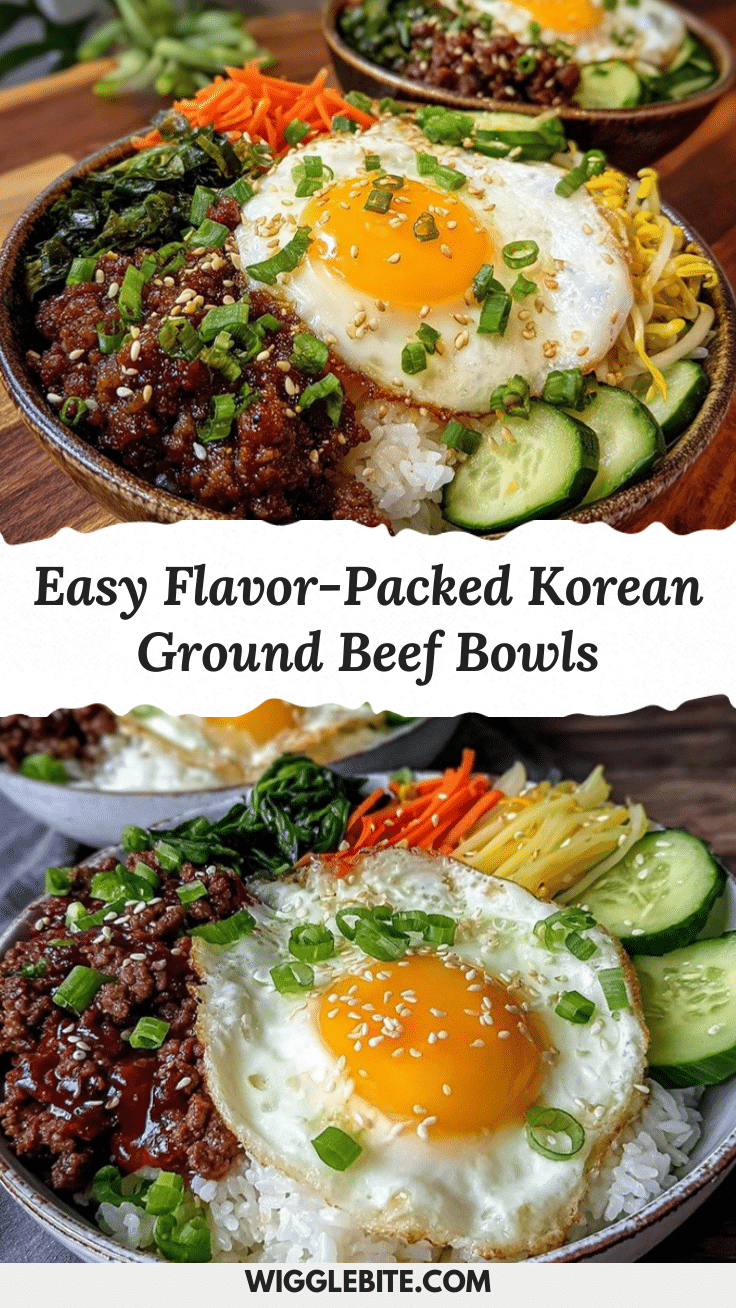
- Assemble the bibimbap bowls: Divide the cooked rice into 4 bowls. Arrange the cooked beef, carrots, spinach, cucumber, and green onions in sections on top of the rice. Place a fried egg in the center of each bowl.
- Garnish and serve: Sprinkle toasted sesame seeds over everything. Serve with extra gochujang on the side for those who want more heat. Mix everything together just before eating for the full flavor experience.
Tip: If you want to save time, cook rice and prep veggies ahead. The beef cooks quickly once marinated.
Cooking Tips & Techniques
One of the trickiest parts is getting the beef perfectly seasoned without overpowering the other ingredients. I learned to taste the marinade before adding the beef, adjusting the soy sauce or sugar to balance salty and sweet. Also, breaking the beef up finely while cooking helps it brown evenly and soak up the flavors better.
Don’t rush wilting the spinach—overcooking makes it mushy and dull in color. A quick toss in a hot pan keeps it bright and fresh. For the eggs, frying sunny-side up is classic, but if you prefer, a soft-boiled egg works just as well and cuts down on oil use.
Remember to toast your sesame seeds lightly in a dry pan before garnishing. This simple step adds a nutty aroma that really makes the dish sing. Honestly, skipping this is a crime against flavor.
Multitasking is your friend here. While the rice simmers, prep your veggies and mix the marinade. That way, everything comes together fast without frantic last-minute chopping.
Variations & Adaptations
- Vegetarian Version: Swap ground beef with crumbled tofu or cooked mushrooms. Add a bit of soy sauce and smoked paprika to mimic umami flavors.
- Spicy Twist: Increase gochujang to 3 tablespoons and add a pinch of red pepper flakes. Top with kimchi for extra zing.
- Low-Carb Option: Replace rice with cauliflower rice or cooked quinoa for a lighter bowl.
- Seasonal Veggies: Swap carrots and cucumbers with sautéed zucchini, bean sprouts, or roasted sweet potatoes depending on the season.
- Personal Variation: Once, I added a splash of rice vinegar to the marinade for a subtle tang that brightened the beef. It was a happy accident that I still do sometimes!
Serving & Storage Suggestions
Serve these bibimbap bowls hot, straight after assembling, so the egg yolk is still runny and the vegetables are crisp. For presentation, I like to arrange the veggies neatly around the beef and place the egg right in the middle—looks colorful and inviting.
Pair this dish with a light cucumber salad or miso soup to round out the meal. A chilled Korean barley tea or a simple iced green tea also complements the flavors nicely.
Leftovers keep well in the fridge for up to 3 days. Store the components separately if possible—rice, beef, and veggies—to maintain texture. Reheat gently in a microwave or skillet, adding a splash of water to keep rice moist. Re-fry the egg fresh for best results, but if pressed, a microwaved scrambled egg works in a pinch.
Flavors deepen after resting, especially the beef marinade soaking into the rice, so leftovers can be surprisingly good the next day.
Nutritional Information & Benefits
Each serving of this Korean ground beef bibimbap bowl provides approximately:
| Calories | Protein | Carbs | Fat | Fiber |
|---|---|---|---|---|
| 550 kcal | 30g | 55g | 18g | 5g |
Key ingredients like garlic and ginger offer anti-inflammatory benefits, while spinach and cucumbers provide vitamins A and C plus fiber. Using lean ground beef keeps the fat in check but still delivers satisfying protein and iron.
This recipe is naturally gluten-free if you choose gluten-free soy sauce, and can be adjusted for low-carb diets by swapping rice. It’s a balanced meal with fresh vegetables, protein, and carbs to fuel you without feeling heavy.
Conclusion
This easy flavor-packed Korean ground beef bibimbap bowl is a winner for anyone wanting bold, authentic flavors without spending hours in the kitchen. I love how it brings together simple ingredients to create something vibrant and comforting. Plus, it’s flexible—you can tweak it to fit your mood or diet.
Give it a try, and don’t hesitate to make it your own. Maybe add more heat, swap veggies, or experiment with different proteins. Cooking should be fun, not stressful, and this recipe proves you can have both flavor and ease on your plate.
If you make this recipe, please leave a comment or share your twists. I’d love to hear how you make these bibimbap bowls your own. Here’s to many quick, delicious dinners ahead!
FAQs
Can I make this recipe ahead of time?
Yes! You can prep the beef and veggies in advance and store them separately in the fridge. Cook the rice fresh or reheat gently before assembling the bowls.
What can I substitute for gochujang if I can’t find it?
Try mixing a bit of chili paste with miso or a touch of soy sauce and honey. It won’t be exact but will add a similar sweet and spicy flavor.
Is this recipe spicy?
The amount of gochujang used gives a mild to moderate spice level. You can adjust it up or down to suit your heat preference.
Can I use brown rice instead of white rice?
Absolutely. Brown rice works well but takes longer to cook. Plan accordingly or use pre-cooked brown rice.
How do I store leftovers to keep them fresh?
Store rice, beef, and veggies separately in airtight containers in the fridge. Reheat gently and add a fresh fried egg when ready to serve.
Pin This Recipe!
Easy Flavor-Packed Korean Ground Beef Bibimbap Bowls Recipe for Quick Weeknight Dinners
A quick and easy Korean ground beef bibimbap bowl recipe that combines bold, authentic flavors with fresh veggies and a fried egg for a satisfying weeknight meal.
- Prep Time: 15 minutes
- Cook Time: 25 minutes
- Total Time: 40 minutes
- Yield: 4 servings 1x
- Category: Main Course
- Cuisine: Korean
Ingredients
- 1 pound (450g) ground beef, preferably 80/20
- 3 tablespoons soy sauce
- 2 tablespoons brown sugar
- 3 cloves garlic, minced
- 1 teaspoon freshly grated ginger
- 2 tablespoons gochujang (Korean chili paste)
- 1 tablespoon toasted sesame oil
- 4 cups cooked white rice (about 900g), preferably short grain
- 1 cup julienned carrots (about 120g)
- 2 cups baby spinach (about 60g), lightly wilted
- 1 medium cucumber, thinly sliced
- 2 stalks green onions, thinly sliced
- 4 large eggs (fried sunny-side up or to your liking)
- 1 tablespoon toasted sesame seeds
- 1 tablespoon vegetable oil (for cooking eggs and beef)
Instructions
- Rinse 2 cups (450g) of short-grain white rice under cold water until the water runs clear. Add rice and 2 1/4 cups (540ml) water to a saucepan, bring to a boil over medium heat, then reduce to low, cover, and simmer for 15 minutes. Remove from heat and let sit, covered, for 10 minutes. Fluff with a fork.
- In a mixing bowl, combine 3 tablespoons soy sauce, 2 tablespoons brown sugar, minced garlic, grated ginger, 2 tablespoons gochujang, and 1 tablespoon toasted sesame oil. Stir well.
- Add 1 pound (450g) ground beef to the marinade, mixing thoroughly with your hands or a spoon. Let it sit for 10 minutes to absorb flavors.
- Heat 1 tablespoon vegetable oil in a large skillet over medium-high heat. Add marinated beef, breaking it apart with a spatula. Cook for 6-8 minutes, until browned and cooked through. Stir occasionally to prevent sticking. If the mixture looks dry, add a splash of water.
- While beef cooks, julienne the carrots, slice the cucumber, and thinly slice green onions. Quickly wilt the spinach in a hot pan for 1-2 minutes or until just softened. Set all veggies aside.
- In a separate small skillet, heat a little vegetable oil over medium heat. Crack in 4 eggs and fry sunny-side up or to your preference.
- Divide the cooked rice into 4 bowls. Arrange the cooked beef, carrots, spinach, cucumber, and green onions in sections on top of the rice. Place a fried egg in the center of each bowl.
- Sprinkle toasted sesame seeds over everything. Serve with extra gochujang on the side for those who want more heat. Mix everything together just before eating.
Notes
Toast sesame seeds lightly in a dry pan before garnishing for added nutty aroma. Adjust gochujang amount to control spice level. For a lighter protein, substitute ground turkey or chicken. Brown rice or cauliflower rice can be used instead of white rice for dietary preferences. Fry eggs sunny-side up for creamy yolk or soft-boiled for less oil.
Nutrition
- Serving Size: 1 bowl with rice, be
- Calories: 550
- Fat: 18
- Carbohydrates: 55
- Fiber: 5
- Protein: 30
Keywords: Korean bibimbap, ground beef bibimbap, quick dinner, weeknight meal, Korean recipe, gochujang, easy bibimbap bowl