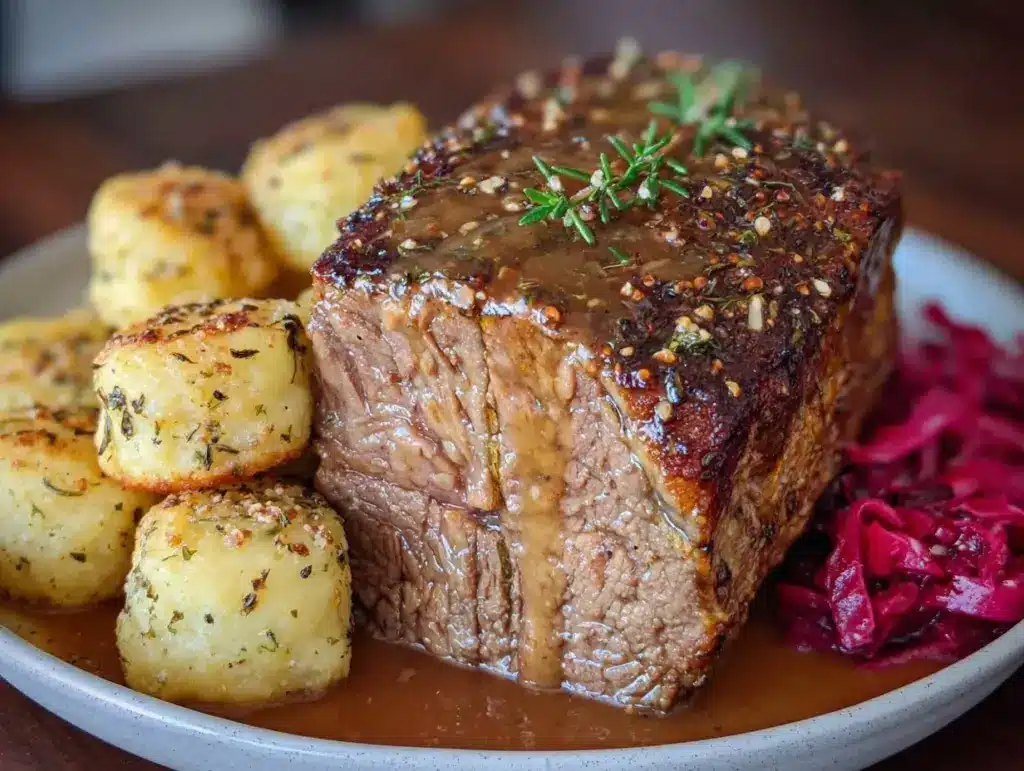
Let me tell you, the aroma of slowly simmering beef, infused with tangy vinegar, warm spices, and a hint of sweetness, wafting from my kitchen is downright irresistible. The first time I made this classic authentic German Sauerbraten, I was instantly hooked—the kind of moment where you pause, take a deep breath, and just smile because you know you’re onto something truly special. Sauerbraten isn’t just any pot roast; it’s a symphony of flavors that sings of old-world charm and hearty comfort.
Years ago, when I was knee-high to a grasshopper, my grandma used to tell stories about her German roots while preparing this very dish. I always loved how Sauerbraten brought the family together, especially on chilly evenings when everyone craved something warm and satisfying. I stumbled upon this recipe on a rainy weekend, trying to recreate that nostalgic magic. Honestly, I wish I’d discovered this recipe years ago—it’s dangerously easy and delivers pure, nostalgic comfort that brightens up any dinner table.
My family couldn’t stop sneaking bites off the platter while it rested, and I can’t really blame them. Sauerbraten with traditional sides is perfect for potlucks, holiday dinners, or simply treating your loved ones to a memorable meal. After testing this recipe multiple times (in the name of research, of course), it’s become a staple for family gatherings and gifting. It feels like a warm hug on a plate, and you’re going to want to bookmark this one for sure.
Why You’ll Love This Recipe
Having cooked and tested this classic authentic German Sauerbraten recipe countless times, I can confidently say it’s a standout for many reasons. Whether you’re a seasoned home cook or just starting out, this recipe brings together simple ingredients and technique to create something truly special.
- Quick & Easy: While traditional Sauerbraten requires marinating, the active prep time is manageable, making it perfect for weekend cooking or special occasions.
- Simple Ingredients: You likely already have most of the ingredients in your pantry and fridge—no need for fancy trips to specialty stores.
- Perfect for Family Meals: Great for cozy dinners or impressing guests with authentic German flavors.
- Crowd-Pleaser: Kids and adults alike rave about the tender, flavorful beef paired with classic sides.
- Unbelievably Delicious: The balance of tangy vinegar, aromatic spices, and slow-cooked beef creates a mouthwatering experience that tastes like it’s straight from a German kitchen.
What makes this Sauerbraten different? The marinade is carefully balanced to tenderize and flavor the beef deeply while keeping it juicy. Plus, the traditional sides included—like red cabbage and potato dumplings—bring the whole meal together authentically. This isn’t just any roast; it’s comfort food that makes you close your eyes after the first bite. It’s soul-soothing, satisfying, and surprisingly straightforward to prepare.
What Ingredients You Will Need
This classic authentic German Sauerbraten recipe uses simple, wholesome ingredients to deliver bold flavor and the satisfying texture you crave without fuss. Most are pantry staples, but a few traditional touches really make a difference.
- For the Sauerbraten Marinade and Meat:
- Beef roast (chuck or rump), about 3 to 4 lbs (1.4 to 1.8 kg) – I prefer well-marbled chuck for tenderness
- Red wine vinegar, 1 cup (240 ml) – the key sour component
- Red wine, 1 cup (240 ml) – dry, like a German Spätburgunder or Pinot Noir
- Beef broth, 2 cups (480 ml) – adds richness
- Onion, 2 medium, sliced – for sweetness and depth
- Carrots, 2 large, chopped – adds natural sweetness
- Bay leaves, 2 – classic aromatic
- Whole cloves, 6 – infuse warmth
- Juniper berries, 8 (optional) – authentic touch, but you can skip if unavailable
- Black peppercorns, 1 teaspoon – fresh cracked preferred
- Salt, to taste
- Sugar or brown sugar, 2 tablespoons – balances acidity
- Vegetable oil or lard, 2 tablespoons – for browning
- Ginger snap cookies, crushed, about 6 (optional) – thickens sauce and adds subtle spice
- For Traditional Sides:
- Red cabbage, 1 small head, shredded – essential for that sweet-tart side
- Apple, 1 medium, peeled and sliced – pairs beautifully with cabbage
- Potatoes, 2 lbs (900 g) – for making potato dumplings or mashed potatoes
- Butter, 2 tablespoons – for richness in sides
- Onion, 1 small, finely chopped – flavor booster for cabbage
- Caraway seeds, 1 teaspoon (optional) – traditional in red cabbage
- Salt and pepper, to taste
For the best results, I like using fresh, organic vegetables and a good quality red wine. For the beef, ask your butcher for a roast suitable for slow cooking. If you can’t find juniper berries, don’t worry—they’re subtle but add that signature German note. The ginger snaps in the sauce are a secret trick to thicken and add complexity; I’ve found brand X to work well, but homemade works too. For a gluten-free version, simply omit the ginger snaps and use a gluten-free thickener like cornstarch.
Equipment Needed
- Large non-reactive bowl or container – for marinating the beef
- Heavy-bottomed Dutch oven or ovenproof pot (6-quart or larger) – perfect for browning and slow-cooking
- Sharp chef’s knife and cutting board – for prepping veggies and meat
- Measuring cups and spoons – to get those vinegar and spice amounts just right
- Slotted spoon – for removing meat and veggies from the marinade
- Fine mesh sieve or strainer – to strain the marinade before making gravy
- Potato masher or ricer (if making mashed potatoes) or a dumpling press (if making Kartoffelklöße)
- Wooden spoon and ladle – for stirring and serving
If you don’t have a Dutch oven, a heavy skillet with a tight-fitting lid works, but be mindful of the oven temperature and cover tightly to keep moisture in. For budget-friendly options, a large casserole dish with foil can substitute for slow roasting. Keeping your knives sharp makes all the difference when prepping the tougher root vegetables and the roast itself.
Preparation Method
- Prepare the Marinade and Meat (Day 1) – 15 minutes active prep
In a large bowl, combine red wine vinegar, red wine, beef broth, sliced onions, chopped carrots, bay leaves, cloves, juniper berries (if using), and black peppercorns. Stir in sugar until dissolved. Place the beef roast in the marinade, cover, and refrigerate for 3 to 5 days, turning the meat daily to ensure even marinating. This slow acid bath tenderizes the meat and infuses it with deep flavor.
Tip: Use a non-reactive container like glass or stainless steel to avoid any metallic taste. - Remove and Dry the Meat – 10 minutes
After marinating, take the beef out and pat it dry thoroughly with paper towels. Strain the marinade and reserve the liquid and vegetables separately.
Tip: Drying the meat before browning is key to getting a nice crust without steaming. - Brown the Beef – 10 minutes
Heat vegetable oil or lard in a Dutch oven over medium-high heat. Brown the beef on all sides until nicely caramelized (about 2-3 minutes per side). Remove the beef and set aside.
Note: Browning seals in flavor and adds depth to the sauce. - Sauté the Marinade Vegetables – 10 minutes
In the same pot, add the reserved marinade vegetables and sauté until softened and fragrant, about 8-10 minutes.
Tip: Scrape up browned bits from the bottom for extra flavor. - Simmer the Sauerbraten – 2.5 to 3 hours
Return the beef to the pot. Pour in the strained marinade liquid. Bring to a simmer, cover, and cook low and slow on the stovetop or in a 325°F (160°C) oven for 2.5 to 3 hours, or until the meat is fork-tender.
Warning: Avoid boiling vigorously; a gentle simmer keeps the meat tender. - Make the Sauce – 15 minutes
Remove the meat and keep warm. Strain the cooking liquid again, discarding solids. Return liquid to the pot and bring to a simmer. Crush the ginger snaps (if using) and whisk them into the sauce to thicken and add spice. Adjust seasoning with salt and pepper.
Tip: If sauce is too thin, simmer longer; for thicker sauce, add a cornstarch slurry. - Prepare Traditional Sides
- Red Cabbage: Sauté onions in butter until translucent. Add shredded cabbage, sliced apple, a splash of vinegar, sugar, and caraway seeds. Simmer gently for 45 minutes until tender and sweet-tart.
- Potato Dumplings: Boil peeled potatoes until tender, mash thoroughly, mix with flour and egg to form dough, shape into dumplings, and boil until they float. Alternatively, mashed potatoes work great too.
- Serve and Enjoy
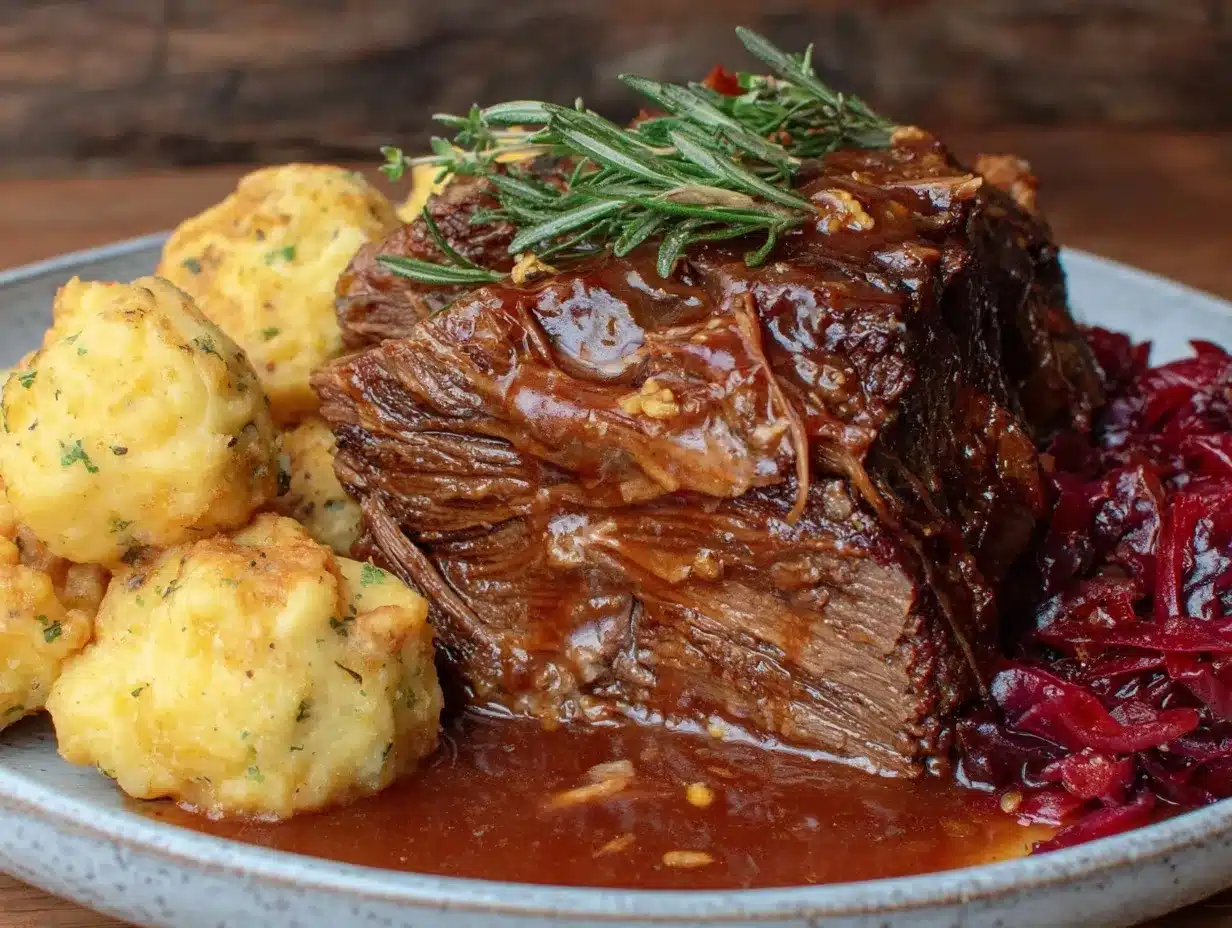
Slice the Sauerbraten thinly and ladle warm sauce over the top. Plate with generous portions of red cabbage and potato dumplings. You’re ready to savor a true taste of Germany.
Personal note: The first bite after all that slow cooking? Pure bliss.
Cooking Tips & Techniques
Let’s face it, Sauerbraten can seem intimidating at first, but a few tricks will make it a breeze. First, don’t rush the marinating process—those few days in the fridge are what make the beef melt-in-your-mouth tender and flavorful. I’ve learned the hard way that skipping or shortening this step leads to a tougher roast.
When browning the beef, make sure the pan is hot enough to create a crust; otherwise, you’ll lose flavor. Also, don’t overcrowd the pan—brown in batches if needed. Handling the sauce is another key part: strain it well to keep it silky smooth and use crushed ginger snaps for natural thickening and subtle spice complexity. I once tried thickening with flour and ended up with lumps—lesson learned!
Timing your sides while the roast simmers is essential. The red cabbage benefits from slow cooking, so start it early. Potato dumplings need immediate serving, so plan accordingly. Multitasking is all about prepping vegetables during those simmering hours. And hey, if you have leftovers, the flavors deepen overnight, making the next day even better.
Variations & Adaptations
There’s room for creativity with this classic German Sauerbraten recipe. Here are a few twists I’ve tried and loved:
- Dietary Swap: Use pork shoulder instead of beef for a different but equally delicious take. It marinates well and can be more budget-friendly.
- Seasonal Variation: In summer, swap the red cabbage side for a fresh cucumber salad with dill and vinegar for a lighter contrast.
- Flavor Twist: Add a tablespoon of dark molasses to the marinade for a richer, slightly sweeter sauce. It’s a subtle but fantastic change.
- Cooking Method: Try cooking Sauerbraten in a slow cooker for convenience. Brown the meat first, then transfer everything to the slow cooker and cook on low for 8 hours.
- Allergen-Friendly: Omit ginger snaps and thicken the sauce with arrowroot or cornstarch slurry if gluten is a concern.
Personally, I once made Sauerbraten with a touch of smoked paprika for a smoky hint—unexpected but impressive. So don’t hesitate to experiment based on your taste buds and pantry.
Serving & Storage Suggestions
Serve Sauerbraten hot, sliced thin, with plenty of that luscious sauce drizzled over. Presentation-wise, a rustic wooden platter or classic white plates complement the rich colors beautifully. Pair it with a German-style lager or a glass of dry Riesling to brighten the palate.
For leftovers, store the meat and sauce separately in airtight containers in the fridge for up to 3 days. The flavors actually deepen overnight, so reheating gently on the stovetop yields an even tastier meal. Red cabbage keeps well refrigerated for about 4 days, while potato dumplings are best fresh but can be frozen for up to a month.
When reheating, add a splash of beef broth or water to the sauce to loosen it if needed. Microwave leftovers covered to prevent drying out, or warm slowly on the stove. The next-day Sauerbraten sandwich on rye bread with mustard? Honestly, one of my favorite quick lunches.
Nutritional Information & Benefits
This classic authentic German Sauerbraten is hearty but balanced. A typical serving (about 6 oz / 170 g of beef with sauce and sides) provides roughly 450-550 calories, depending on ingredient choices.
Beef offers high-quality protein, iron, and B vitamins essential for energy. The vinegar marinade supports digestion and adds a unique tang without extra calories. Red cabbage is rich in antioxidants and vitamin C, while potatoes provide potassium and fiber when prepared with the skin.
This recipe can be adapted to gluten-free by swapping ginger snaps and using gluten-free sides. It’s a wonderful way to enjoy traditional flavors with wholesome ingredients, making it a comforting option for many dietary needs.
Conclusion
Classic authentic German Sauerbraten with traditional sides is truly a recipe worth making. It brings together rich history, bold flavors, and comforting textures in one unforgettable meal. Whether you stick to the traditional version or try one of the variations, you’ll be rewarded with a dish that feels like a warm hug on a plate.
I love this recipe because it connects me to my family’s roots and brings everyone around the table. Plus, it’s just plain delicious! Give it a shot, tweak it to your liking, and don’t forget to share your experience. When you make this Sauerbraten, you’re not just cooking—you’re creating a memory.
Go on, give it a try—you’re going to want to bookmark this classic for years to come!
FAQs
How long should I marinate Sauerbraten for best results?
Marinating for 3 to 5 days in the refrigerator is ideal to tenderize the beef and develop that signature tangy flavor.
Can I make Sauerbraten without red wine?
Yes! You can substitute red wine with additional beef broth and a splash of balsamic vinegar to keep the acidity and depth.
What cut of beef is best for Sauerbraten?
Chuck roast or rump roast works best due to their marbling and ability to stay tender with slow cooking.
Are there vegetarian alternatives to Sauerbraten?
While traditional Sauerbraten is meat-based, you can try marinating and slow-cooking seitan or portobello mushrooms with similar spices for a vegetarian version.
How do I thicken the Sauerbraten sauce if it’s too thin?
Crushed ginger snaps naturally thicken the sauce. Alternatively, use a cornstarch or flour slurry, adding it gradually while simmering until desired thickness.
Pin This Recipe!
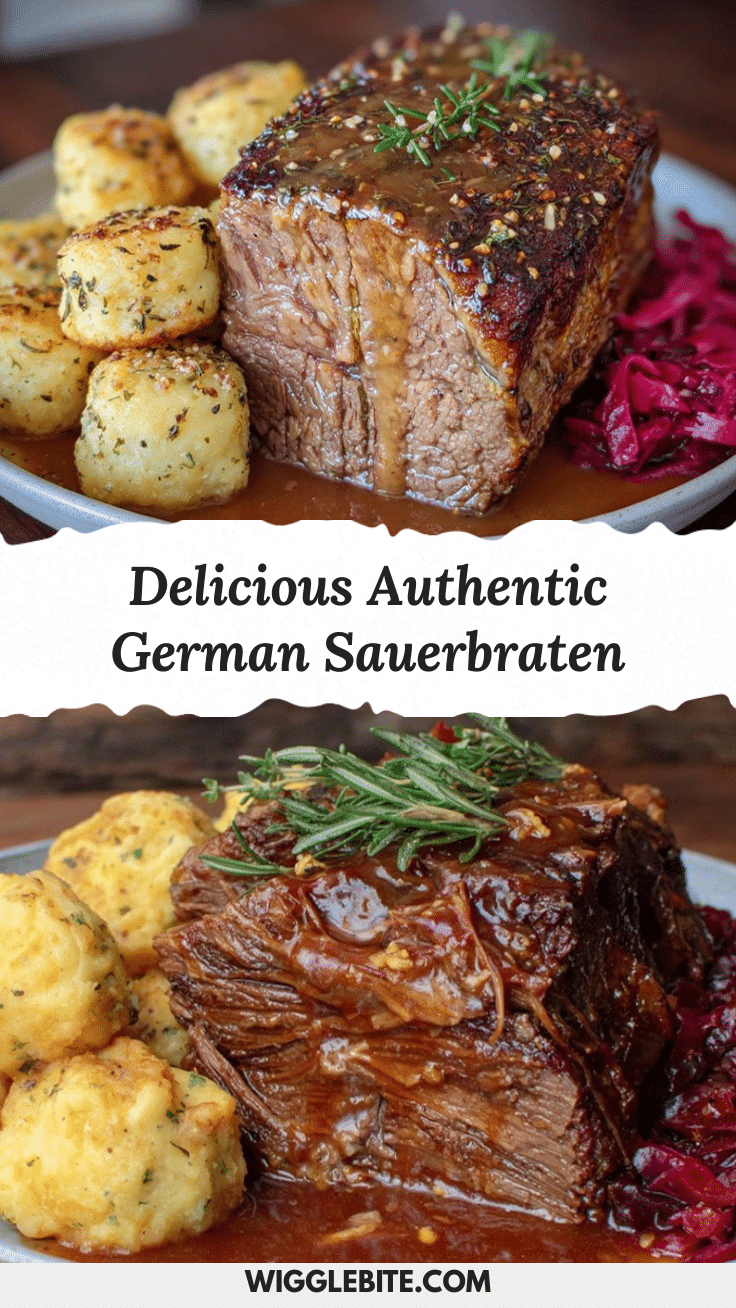
Classic Authentic German Sauerbraten Recipe Easy Traditional Sides Included

A traditional German pot roast marinated in a tangy vinegar and spice mixture, slow-cooked to tender perfection and served with classic sides like red cabbage and potato dumplings.
- Prep Time: 15 minutes active prep (plus 3 to 5 days marinating)
- Cook Time: 3 hours
- Total Time: 3 hours 15 minutes active (plus 3 to 5 days marinating)
- Yield: 6 servings 1x
- Category: Main Course
- Cuisine: German
Ingredients
- 3 to 4 lbs beef roast (chuck or rump), well-marbled
- 1 cup red wine vinegar (240 ml)
- 1 cup dry red wine (240 ml), such as German Spätburgunder or Pinot Noir
- 2 cups beef broth (480 ml)
- 2 medium onions, sliced
- 2 large carrots, chopped
- 2 bay leaves
- 6 whole cloves
- 8 juniper berries (optional)
- 1 teaspoon black peppercorns, fresh cracked
- Salt, to taste
- 2 tablespoons sugar or brown sugar
- 2 tablespoons vegetable oil or lard
- 6 crushed ginger snap cookies (optional)
- 1 small head red cabbage, shredded
- 1 medium apple, peeled and sliced
- 2 lbs potatoes (900 g)
- 2 tablespoons butter
- 1 small onion, finely chopped
- 1 teaspoon caraway seeds (optional)
- Salt and pepper, to taste
Instructions
- Prepare the marinade by combining red wine vinegar, red wine, beef broth, sliced onions, chopped carrots, bay leaves, cloves, juniper berries (if using), black peppercorns, and sugar in a large non-reactive bowl. Stir until sugar dissolves.
- Place the beef roast in the marinade, cover, and refrigerate for 3 to 5 days, turning daily to ensure even marinating.
- After marinating, remove the beef and pat dry thoroughly with paper towels. Strain the marinade, reserving liquid and vegetables separately.
- Heat vegetable oil or lard in a Dutch oven over medium-high heat. Brown the beef on all sides, about 2-3 minutes per side. Remove and set aside.
- In the same pot, sauté the reserved marinade vegetables until softened and fragrant, about 8-10 minutes, scraping up browned bits.
- Return the beef to the pot and pour in the strained marinade liquid. Bring to a gentle simmer, cover, and cook on stovetop or in a 325°F (160°C) oven for 2.5 to 3 hours until fork-tender.
- Remove the meat and keep warm. Strain the cooking liquid again, discarding solids. Return liquid to pot and bring to simmer.
- Whisk crushed ginger snaps (if using) into the sauce to thicken and add spice. Adjust seasoning with salt and pepper. Simmer longer if needed or add cornstarch slurry for thicker sauce.
- Prepare traditional sides: For red cabbage, sauté chopped onion in butter until translucent, add shredded cabbage, sliced apple, a splash of vinegar, sugar, and caraway seeds. Simmer gently for 45 minutes until tender.
- For potato dumplings, boil peeled potatoes until tender, mash thoroughly, mix with flour and egg to form dough, shape into dumplings, and boil until they float. Alternatively, prepare mashed potatoes.
- Slice the Sauerbraten thinly, ladle warm sauce over the top, and serve with red cabbage and potato dumplings.
Notes
Use a non-reactive container for marinating to avoid metallic taste. Dry meat thoroughly before browning to get a good crust. Brown meat in batches if needed to avoid overcrowding. Crushed ginger snaps naturally thicken the sauce; for gluten-free, use cornstarch slurry. Marinate for full 3 to 5 days for best tenderness and flavor. Slow simmer gently to keep meat tender. Leftovers taste better the next day. Serve with German lager or dry Riesling.
Nutrition
- Serving Size: About 6 oz (170 g) b
- Calories: 500
- Sugar: 10
- Sodium: 600
- Fat: 22
- Saturated Fat: 7
- Carbohydrates: 35
- Fiber: 5
- Protein: 40
Keywords: Sauerbraten, German pot roast, traditional German recipe, marinated beef, red cabbage, potato dumplings, slow-cooked beef, authentic German cuisine