Let me just say—the scent of sautéed onions mingling with warm spices and toasted nuts from my kitchen as I make this cauliflower rice pilaf is downright irresistible. There’s a gentle sizzle, the kind that gets your belly rumbling and your mind drifting to cozy holiday tables. Honestly, every time I lift that lid and let the steam rush out, it’s like a little burst of Thanksgiving magic right at home.
The first time I whipped up this flavorful cauliflower rice pilaf, I was trying to recreate the festive feeling of my childhood Thanksgivings (when I was knee-high to a grasshopper, you know). Our family always had a rice pilaf at the table, but as I moved toward a keto lifestyle, I realized I could make something just as comforting—without the carbs. That first forkful was one of those moments where you pause, take a deep breath, and just smile because you know you’re onto something truly special.
My family couldn’t stop sneaking spoonfuls off the serving platter (and I can’t really blame them). Even my picky uncle, who swears he’ll never eat “rabbit food,” ended up asking for seconds. This dish brings together nostalgia and modern keto goodness in a way that feels like a warm hug, especially around the holidays.
Honestly, I wish I’d discovered cauliflower rice years ago. It’s dangerously easy, pure comfort, and brightens up your Thanksgiving spread like nobody’s business. Perfect for potlucks, weeknight dinners, or as the star side for your festive keto Thanksgiving. I’ve tested this pilaf more times than I care to admit—in the name of research, of course! It’s now a staple for family gatherings, gifting, and whenever I need that familiar, cozy feeling. Trust me, you’re going to want to bookmark this one.
Why You’ll Love This Cauliflower Rice Pilaf Recipe
When you’re on the hunt for a keto-friendly side that actually tastes amazing, this cauliflower rice pilaf checks all the boxes. After years of tinkering (and more than a few kitchen mishaps), I finally landed on a version that’s festive, colorful, and bursting with flavor.
- Quick & Easy: Comes together in under 30 minutes—just what you need when the holiday chaos is in full swing.
- Simple Ingredients: No fancy shopping trips required—most of the ingredients are pantry staples or easy finds at any grocery store.
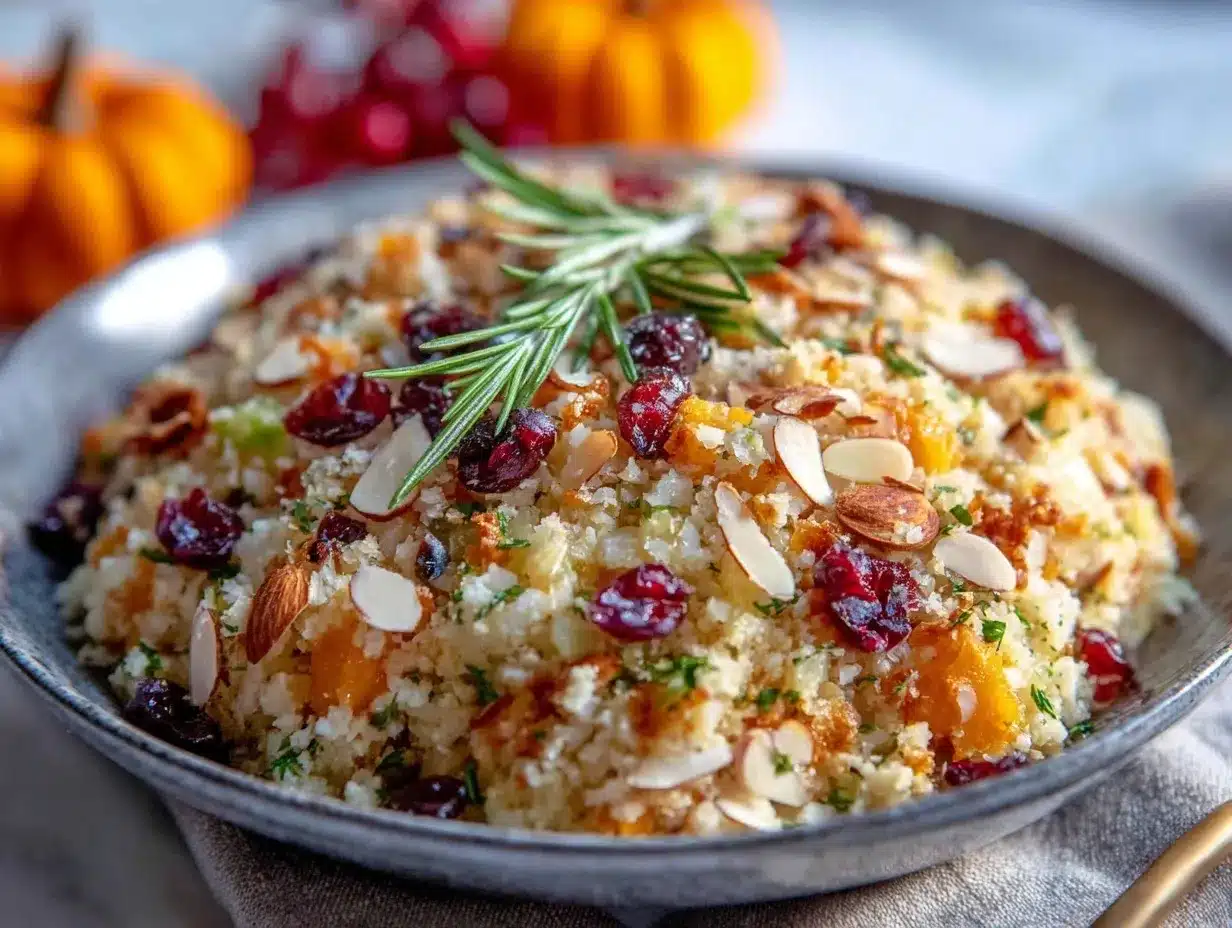
- Perfect for Thanksgiving: With golden spices, crunchy nuts, and pops of dried cranberry, it looks gorgeous on any holiday table.
- Crowd-Pleaser: Even folks who “don’t like cauliflower” keep coming back for more (true story—my sister is now a convert).
- Unbelievably Delicious: The savory-sweet combo with a hint of citrus is pure comfort food, just made lighter.
What sets this cauliflower rice pilaf apart? For starters, it’s not just plain old cauliflower rice. I use a special spice blend, lightly toast the nuts for a deeper flavor, and finish with a splash of fresh lemon juice to brighten everything up. (Let’s face it, bland pilaf is just sad.)
You’ll find this recipe is more than just good—it’s the kind that makes you close your eyes after the first bite. It’s comfort, tradition, and a little bit of “wow” all wrapped up in one bowl. Perfect for impressing guests without breaking a sweat, or turning a simple meal into something memorable. Whether you’re keto, low-carb, or just looking to sneak in more veggies, you’re going to love how festive and satisfying this pilaf feels.
What Ingredients You Will Need
This cauliflower rice pilaf uses simple, wholesome ingredients to deliver bold flavor and a satisfying texture—without any fuss. Most are pantry staples, and you can swap in seasonal touches if you’re feeling creative. Here’s what you’ll need:
- For the Pilaf Base:
- 1 large head cauliflower (or 4 cups/400g pre-riced cauliflower—fresh or frozen)
- 2 tablespoons olive oil (or avocado oil)
- 1 small onion, finely diced (adds sweetness and depth)
- 2 cloves garlic, minced
- Salt and pepper, to taste
- For Festive Flavor:
- 1/2 teaspoon ground cumin
- 1/2 teaspoon ground coriander
- 1/4 teaspoon turmeric (for golden color)
- 1/4 teaspoon cinnamon (optional, a subtle warmth)
- 1/4 cup dried cranberries, unsweetened or reduced sugar (for a pop of color—use chopped dried apricots for lower carb alternative)
- 1/4 cup toasted slivered almonds (or walnuts, pecans—your call)
- Zest of 1 lemon (plus juice for finishing)
- 2 tablespoons chopped fresh parsley (or cilantro, if you prefer)
- Optional Add-Ins:
- 2 tablespoons chopped pistachios (for extra crunch)
- 1/4 cup diced celery (for freshness)
- 1/4 cup pomegranate arils (for a festive look at holiday tables)
If you’re going strictly keto, swap cranberries for chopped nuts or seeds. In the summer, I love tossing in fresh herbs and a handful of diced bell pepper. And honestly, any nut works, but I usually go for almonds because they toast up nicely without overpowering the other flavors. For the cauliflower rice itself, you can use store-bought or make your own—just look for firm heads without brown spots. My personal favorite brand for pre-riced cauliflower is Trader Joe’s (it’s reliably fresh and not watery).
If you need dairy-free, this recipe fits the bill as written. For gluten-free, just double-check your dried fruits for hidden wheat. Want to make it vegan? You’re already there! This pilaf is flexible, festive, and just plain good.
Equipment Needed
- Large skillet or sauté pan: A nonstick or heavy-bottomed pan is best for even cooking and easy cleanup.
- Food processor: If you’re making cauliflower rice from scratch, a food processor makes quick work of it. (A box grater works too, but expect a little workout!)
- Cutting board and sharp knife: For prepping your veggies and nuts. I love my old wooden board—it’s seen a lot of pilaf action.
- Microplane or zester: For getting that lemon zest just right. If you don’t have one, a fine grater works.
- Wooden spoon or spatula: For stirring gently—trust me, using a thin spatula helps keep the cauliflower rice fluffy.
- Measuring cups and spoons: For accuracy. A digital scale is handy if you like to be precise (especially for nut portions).
- Serving bowl: Something festive to show off your pilaf at the table!
If you don’t have a food processor, don’t sweat it—a box grater or even a sharp knife does the trick. When I first made this, I used a cheap nonstick pan from the discount store, and it still turned out great. For toasting nuts, just use a dry pan and watch closely (they burn fast!). Maintenance tip: keep your food processor blades sharp by hand-washing and drying right away. Budget tip: Aldi often has affordable nuts and dried fruit in bulk—worth checking out if you’re hosting a crowd.
Preparation Method
- Rice the Cauliflower
- Remove leaves and cut cauliflower into florets.
- Pulse in a food processor until it resembles rice grains—about 1/4-inch pieces. (If using pre-riced cauliflower, skip this step.)
- Tip: Don’t over-process or you’ll end up with mush!
Sensory cue: It should look like fluffy white rice, not wet or soggy.
- Toast the Nuts
- Heat a dry skillet over medium heat.
- Add slivered almonds (or chosen nuts), stirring until golden and fragrant—about 2-3 minutes.
- Remove promptly to avoid burning.
Tip: You’ll smell a nutty aroma when they’re ready.
- Sauté the Aromatics
- Add olive oil to the skillet and warm over medium heat.
- Stir in diced onion and cook until soft and translucent—about 5 minutes.
- Add garlic, cumin, coriander, turmeric, and cinnamon. Sauté until fragrant, about 1 minute.
- If adding celery, toss it in with the onions.
Warning: Don’t let garlic brown or it’ll taste bitter.
- Add Cauliflower Rice
- Mix in the riced cauliflower and stir to coat with spices and oil.
- Season with salt and pepper.
- Spread the cauliflower evenly and let it cook, stirring occasionally, for 8-10 minutes.
- Tip: If the pan looks dry, add a splash of water (about 2 tablespoons/30ml).
Sensory cue: Cauliflower should be tender but not mushy; steam will rise and bits should start to turn golden.
- Finish and Serve
- Stir in dried cranberries, toasted nuts, and lemon zest.
- Cook for another 2 minutes until everything is warmed through.
- Turn off the heat and squeeze in fresh lemon juice (about half a lemon).
- Fold in chopped parsley.
- Taste and adjust salt, pepper, or lemon to your liking.
Tip: The pilaf should be fluffy, fragrant, and colorful!
If your cauliflower releases too much moisture, just let it cook a little longer with the lid off. If you want extra crunch, sprinkle on more nuts before serving. For make-ahead, prep everything except the parsley and lemon juice—they go in right before serving for max freshness. I always keep a close eye when toasting nuts (burnt almonds are no fun, trust me). Efficiency tip: prep veggies while onions are sautéing to save time. This recipe makes about 4 hearty servings (or 6 as a side).
Cooking Tips & Techniques
After plenty of trial and error, I’ve picked up a few tricks for getting this cauliflower rice pilaf just right. First off, always dry your cauliflower thoroughly after ricing it. Wet cauliflower leads to soggy pilaf—learned that the hard way during my first attempt.
Don’t rush the onion sauté—taking the time to get them soft (not browned) adds real depth. It’s tempting to crank the heat when you’re short on time, but a gentle medium is the way to go. For the spices, blooming them in the oil lets their flavors really shine (and makes your kitchen smell amazing).
Common mistake? Overcooking the cauliflower. You want it tender with a little bite, not mushy. If you’re multitasking, set a timer—cauliflower cooks fast, and distractions happen (especially with kids helping!).
If you notice the pilaf looking pale or bland, don’t be afraid to up the turmeric or add a dash more lemon zest. I’ve even tossed in a handful of fresh herbs at the end for extra color. For consistency, use the same size florets when ricing—uneven pieces cook unevenly and can make the texture weird. Last tip: taste before serving. Sometimes the pilaf needs a little extra salt or bright citrus, depending on your ingredients. These little adjustments—learned from far too many “meh” batches—make all the difference.
Variations & Adaptations
This pilaf is endlessly customizable. Here are some of my favorite ways to change things up:
- Low-Carb: Swap dried cranberries for chopped nuts or sunflower seeds. You’ll cut the carbs and add extra crunch.
- Vegan & Dairy-Free: The recipe is naturally vegan, but if you want extra richness, stir in a tablespoon of coconut oil at the end.
- Seasonal Flavors: Mix in roasted butternut squash cubes during the fall, or fresh peas in spring. It’s a fun way to match the seasons.
- Herbs & Spices: Try fresh dill or mint for a Mediterranean twist. Add a pinch of smoked paprika for a deeper flavor.
- Cooking Methods: Bake the pilaf in a casserole dish for crisp edges (350°F/175°C for 15 minutes), or use an air fryer for a roasted vibe.
- Allergen Substitutions: Use pumpkin seeds instead of nuts if needed, and check labels on dried fruit for hidden gluten.
Personally, I love making a “harvest” version with pecans, rosemary, and diced apple (just a little for that sweet crunch). For a crowd, double the batch and serve in a big, colorful bowl—trust me, it disappears fast. Whatever your taste or dietary needs, this cauliflower rice pilaf can fit the bill.
Serving & Storage Suggestions
Serve this cauliflower rice pilaf hot or warm for best flavor. I like to pile it high in a festive serving bowl and sprinkle extra fresh herbs and nuts on top—makes it look Pinterest-ready! It pairs beautifully with roast turkey, chicken, or a vegetarian main. Try it alongside keto stuffing or a crisp green salad for a complete meal.
If you’re prepping ahead, store leftovers in an airtight container in the fridge for up to 4 days. For freezing, portion pilaf into freezer bags—flatten them out for quicker thawing. To reheat, warm gently in a skillet with a splash of water (don’t microwave for too long or it’ll get mushy). The flavors actually deepen overnight, so it’s even better the next day.
Honestly, the lemon and herbs stay brightest if added fresh, but I often prep everything else in advance and finish right before serving. This pilaf travels well too—just keep it chilled and reheat at your destination. For party spreads, serve chilled as a salad with extra lemon juice. However you serve it, this dish is sure to be a hit.
Nutritional Information & Benefits
Per serving (about 1 cup/150g):
Calories: 120
Fat: 7g
Carbs: 8g (net carbs: 5g)
Protein: 4g
Fiber: 3g
Cauliflower is packed with vitamin C, fiber, and antioxidants—great for immunity and gut health. Nuts add healthy fats and a satisfying crunch, while olive oil delivers heart-friendly monounsaturated fats. This recipe is keto, gluten-free, dairy-free, and vegan. If you have nut allergies, swap for seeds or skip entirely—still delicious!
From a wellness perspective, cauliflower rice is a fantastic way to reduce carbs without missing out on flavor or comfort. It’s filling, low-glycemic, and won’t leave you feeling sluggish after a big meal. I’ve found it helps me stay energized during busy holidays, and the fiber keeps everything moving (if you know what I mean).
Conclusion
This cauliflower rice pilaf is honestly one of those recipes you’ll keep coming back to—whether you’re keto, low-carb, or just love good food. It’s festive, flavorful, and so easy you’ll wonder why you ever bothered with traditional rice. The balance of spices and textures makes every bite memorable, and the flexibility means you can make it your own.
I hope you give this pilaf a try for your next festive meal (or even just a cozy weeknight dinner). Tweak the spices, swap in your favorite nuts, go wild with fresh herbs—make it yours! Personally, I love it because it brings a little nostalgia and a lot of flavor to my table, minus the carb crash.
Drop a comment below if you try it, share your own twists, or pin it to your holiday board. I’d love to hear how this recipe finds a home in your celebrations. Here’s to more tasty, feel-good moments—happy cooking!
Frequently Asked Questions
Can I make cauliflower rice pilaf ahead of time?
Absolutely! Prep everything except the parsley and lemon juice, then finish those right before serving. Leftovers taste great and reheat easily.
Is this recipe suitable for vegans and vegetarians?
Yes! The pilaf is naturally vegan and vegetarian. Just double-check your dried fruit for hidden animal ingredients.
Can I use frozen cauliflower rice?
You sure can. Just thaw and pat dry before cooking to avoid excess moisture. Fresh works best for texture, but frozen is a good shortcut.
How do I keep my cauliflower rice from getting soggy?
Dry the cauliflower thoroughly after ricing. Cook uncovered and don’t add extra liquid unless needed. If it’s watery, just keep cooking until the moisture evaporates.
What nuts work best in this pilaf?
Almonds, pecans, pistachios, and walnuts are all great choices. Toast them for extra flavor, or swap for seeds if you have allergies.
Pin This Recipe!
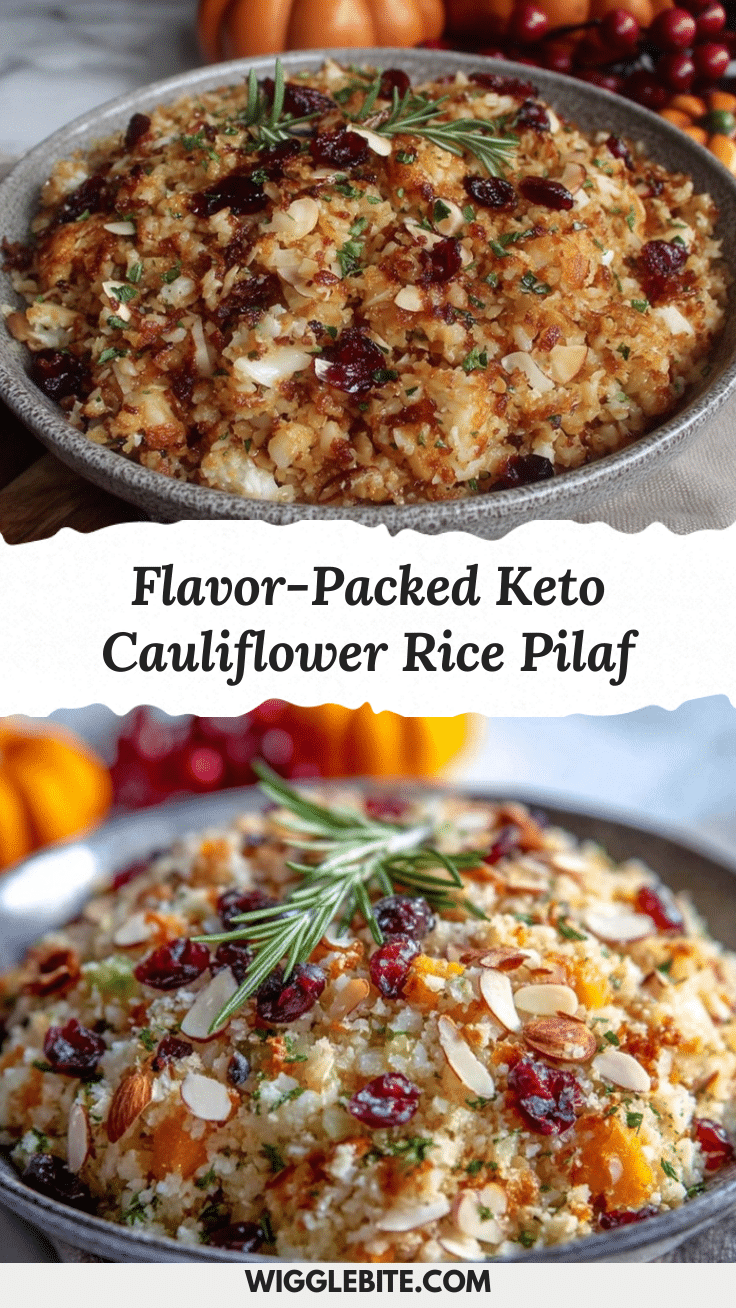
Cauliflower Rice Pilaf Recipe: Easy Festive Keto Thanksgiving Side

This cauliflower rice pilaf is a festive, keto-friendly side dish bursting with warm spices, toasted nuts, and pops of dried cranberry. It’s quick to make, crowd-pleasing, and perfect for Thanksgiving or any cozy gathering.
- Prep Time: 10 minutes
- Cook Time: 15 minutes
- Total Time: 25 minutes
- Yield: 4 servings 1x
- Category: Side Dish
- Cuisine: American
Ingredients
- 1 large head cauliflower (or 4 cups/400g pre-riced cauliflower—fresh or frozen)
- 2 tablespoons olive oil (or avocado oil)
- 1 small onion, finely diced
- 2 cloves garlic, minced
- Salt and pepper, to taste
- 1/2 teaspoon ground cumin
- 1/2 teaspoon ground coriander
- 1/4 teaspoon turmeric
- 1/4 teaspoon cinnamon (optional)
- 1/4 cup dried cranberries, unsweetened or reduced sugar (or chopped dried apricots for lower carb alternative)
- 1/4 cup toasted slivered almonds (or walnuts, pecans)
- Zest of 1 lemon (plus juice for finishing)
- 2 tablespoons chopped fresh parsley (or cilantro)
- Optional: 2 tablespoons chopped pistachios
- Optional: 1/4 cup diced celery
- Optional: 1/4 cup pomegranate arils
Instructions
- Remove leaves and cut cauliflower into florets. Pulse in a food processor until it resembles rice grains—about 1/4-inch pieces. (If using pre-riced cauliflower, skip this step.)
- Heat a dry skillet over medium heat. Add slivered almonds (or chosen nuts), stirring until golden and fragrant—about 2-3 minutes. Remove promptly to avoid burning.
- Add olive oil to the skillet and warm over medium heat. Stir in diced onion and cook until soft and translucent—about 5 minutes.
- Add garlic, cumin, coriander, turmeric, and cinnamon. Sauté until fragrant, about 1 minute. If adding celery, toss it in with the onions.
- Mix in the riced cauliflower and stir to coat with spices and oil. Season with salt and pepper. Spread the cauliflower evenly and let it cook, stirring occasionally, for 8-10 minutes. If the pan looks dry, add a splash of water (about 2 tablespoons).
- Stir in dried cranberries, toasted nuts, and lemon zest. Cook for another 2 minutes until everything is warmed through.
- Turn off the heat and squeeze in fresh lemon juice (about half a lemon). Fold in chopped parsley.
- Taste and adjust salt, pepper, or lemon to your liking. Serve hot or warm, garnished with extra herbs and nuts if desired.
Notes
Dry cauliflower thoroughly after ricing to avoid soggy pilaf. Toast nuts for extra flavor, and add lemon juice and parsley just before serving for freshness. For make-ahead, prep everything except parsley and lemon juice. Swap cranberries for nuts or seeds for lower carb. Use any nut or seed you prefer. Recipe is naturally vegan, gluten-free, and dairy-free.
Nutrition
- Serving Size: About 1 cup (150g) p
- Calories: 120
- Sugar: 3
- Sodium: 150
- Fat: 7
- Saturated Fat: 1
- Carbohydrates: 8
- Fiber: 3
- Protein: 4
Keywords: cauliflower rice, keto, Thanksgiving, pilaf, low-carb, vegan, gluten-free, festive, holiday side, healthy