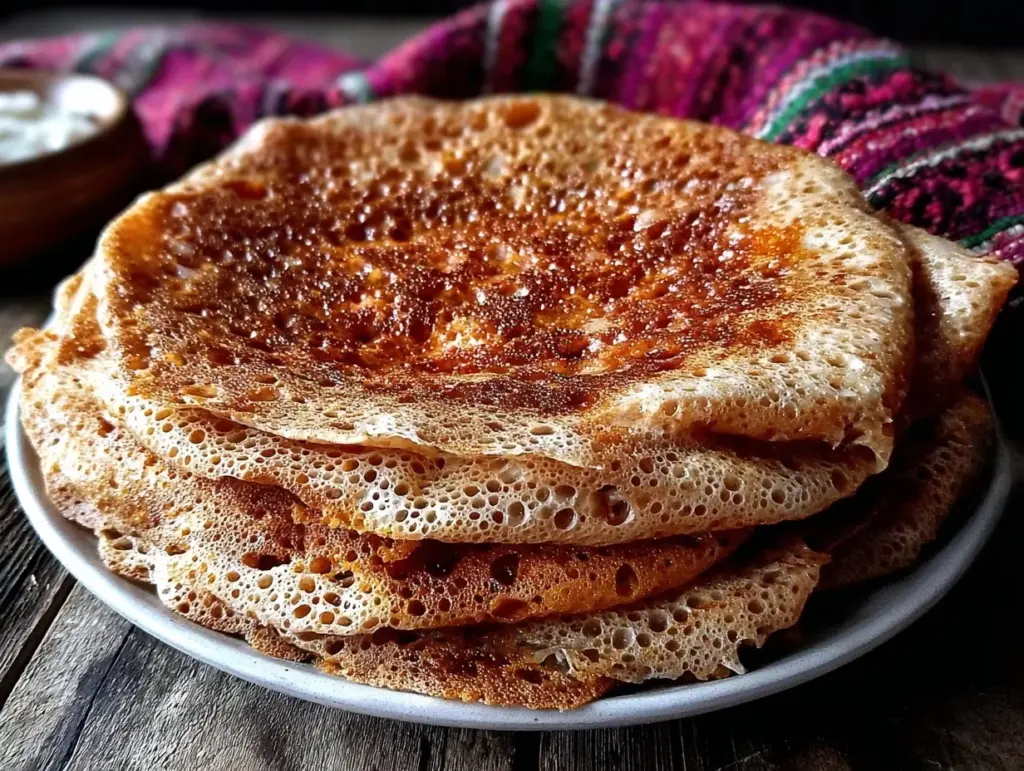
Let me tell you, the first time I cracked open a freshly baked batch of fluffy tangy injera, the smell alone had me hooked. That warm, slightly sour aroma, wafting up in gentle curls from the pan, was enough to make my mouth water and my heart skip a beat. Honestly, there’s something magical about this Ethiopian sourdough flatbread — the kind of moment where you pause, take a deep breath, and just smile because you know you’re onto something truly special.
I first tasted injera years ago when I was knee-high to a grasshopper, visiting family friends who hailed from Addis Ababa. The spongy texture and tangy bite were unlike anything I’d ever tried before. Since then, I’ve tried recreating it many times—some attempts more successful than others. But this particular fluffy tangy injera recipe is dangerously easy and delivers pure, nostalgic comfort every single time.
My family couldn’t stop sneaking these flatbreads off the cooling rack (and I can’t really blame them). It’s perfect for potlucks, a sweet treat for your kids, or a way to brighten up your Pinterest cookie board with something authentically unique. After testing this recipe multiple times—in the name of research, of course—it’s become a staple for family gatherings and gifting. It feels like a warm hug on a plate, and you’re going to want to bookmark this one.
Why You’ll Love This Fluffy Tangy Injera Recipe
This isn’t just another sourdough flatbread recipe—I’ve poured countless hours into perfecting it so it’s approachable, authentic, and downright delicious. Let me share why this Ethiopian injera stands out:
- Quick & Easy: Comes together with simple steps, no fancy equipment needed, perfect for busy weeknights or last-minute cravings.
- Simple Ingredients: Uses traditional teff flour combined with all-purpose flour, so you don’t have to hunt down rare products.
- Perfect for Gatherings: Ideal for sharing with friends and family during cozy dinners or cultural celebrations.
- Crowd-Pleaser: The light, airy texture paired with that signature tang makes it an instant hit with kids and adults alike.
- Unbelievably Delicious: The balance of sourness and fluffiness hits just right—comfort food with a unique twist.
What makes this recipe different? The secret lies in the fermentation process—using a traditional Ethiopian sourdough starter or a simple homemade one to achieve that authentic tang. Plus, blending teff with all-purpose flour gives it a fluffier texture than many injera recipes you’ll find online. This recipe isn’t just good; it’s the kind of flatbread that makes you close your eyes after the first bite, savoring the layers of flavor and tradition.
If you want a recipe that feels like a little celebration every time you make it, this fluffy tangy injera flatbread is your new go-to.
What Ingredients You Will Need
This recipe uses simple, wholesome ingredients to deliver bold flavor and satisfying texture without the fuss. Most are pantry staples or easy to find, and I’ll guide you through some handy substitutions too.
- Teff flour (1 cup / 120g) – The star ingredient, usually found in health food stores or online. I recommend a fine ground teff for best texture.
- All-purpose flour (1 cup / 120g) – Helps lighten the injera for that fluffy feel. You can swap this with gluten-free flour blend if needed.
- Warm water (2 cups / 475ml) – For mixing and activating the sourdough starter.
- Sourdough starter (1/4 cup / 60ml) – Traditional Ethiopian starters work great, but a mild homemade or store-bought sourdough starter will do just fine.
- Salt (1/2 teaspoon) – Balances the flavors.
- Vegetable oil or melted clarified butter (for cooking) – Use neutral oil or traditional niter kibbeh if you want to get fancy.
If you’re curious, in summer I sometimes swap all-purpose flour for a mix of whole wheat and white flour, adding a rustic touch. For gluten-free friends, almond or chickpea flour blends work well but expect a denser injera. Also, I prefer Bob’s Red Mill teff flour for consistency, but any quality brand will do.
Equipment Needed
- Large mixing bowl: For combining your batter ingredients comfortably.
- Whisk or wooden spoon: To mix batter smoothly without lumps.
- Non-stick skillet or traditional mitad griddle: A flat, heavy-bottomed pan works well. A cast-iron skillet is my go-to for even heat distribution.
- Lid or large plate: To cover the injera as it cooks, trapping steam for fluffiness.
- Measuring cups and spoons: For precise ingredient amounts.
If you don’t have a mitad griddle, no worries—the non-stick skillet does the trick just fine. For budget-friendly options, a basic cast iron or heavy sauté pan works wonders and lasts forever. Just be sure to keep it well-seasoned to prevent sticking. If you have a kitchen thermometer, keep it handy to check your pan temperature (around 350°F / 175°C is ideal).
Preparation Method
- Mix the flours and starter: In your large bowl, whisk together 1 cup (120g) teff flour and 1 cup (120g) all-purpose flour. Add 1/4 cup (60ml) sourdough starter and 2 cups (475ml) warm water. Stir well until smooth and lump-free. This should take about 5 minutes.
- Let the batter ferment: Cover the bowl loosely with a clean towel or plastic wrap. Set aside at room temperature for 24-48 hours. You’ll notice bubbles forming and a pleasant sour aroma developing—this is your injera coming alive! If you’re in a colder climate, fermentation might take longer; patience pays off here.
- Add salt and stir: Once fermentation is done, stir in 1/2 teaspoon salt. The batter should be pourable but thick enough to coat the back of a spoon. If too thick, add a splash of water.
- Heat your pan: Place your skillet or mitad on medium heat. Drizzle a little oil and wipe excess with paper towel. It should feel hot but not smoking (about 350°F / 175°C). A properly heated pan is crucial for the perfect injera texture.
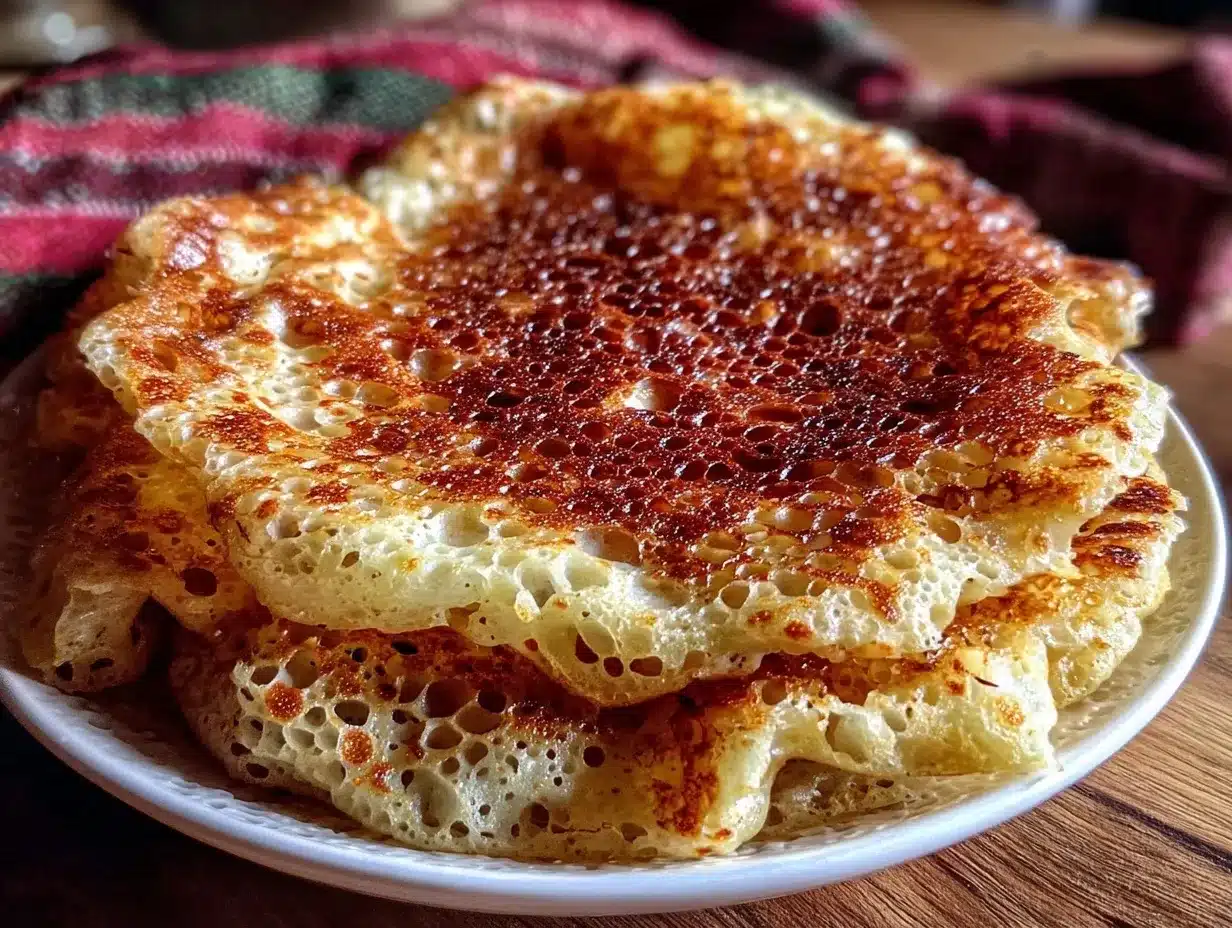
- Cook the injera: Pour about 1/2 cup (120ml) batter into the pan, starting from the outside and spiraling inward, creating a thin, even circle about 9-10 inches (23-25cm) wide. Cover immediately with a lid or plate to trap steam. Cook for 2-3 minutes. You’ll see bubbles forming on the surface and edges lifting slightly.
- Check doneness: The injera is ready when the surface is dry and spongy, and the bottom has light brown spots. Do not flip! Carefully remove with a spatula and place on a clean towel or plate. Repeat with remaining batter.
- Serve warm: Injera is best enjoyed fresh but can be covered with a damp cloth to keep moist for a few hours.
Quick tip: If your injera turns out dense, it probably needs a bit more fermentation time or your pan’s temperature is too high. Lower the heat and give the batter another day to develop. I learned this the hard way (lots of flat, tough injera early on!), but once you nail the timing and temp, it’s smooth sailing.
Cooking Tips & Techniques
Getting injera just right is a little art and a little science. Here’s what I’ve learned through trial and error:
- Patience with fermentation: Don’t rush it. That tangy flavor and spongy texture come from letting the batter develop naturally over a day or two.
- Temperature control: Too hot and the injera will burn on the bottom before cooking through; too cool and it won’t form those beautiful holes and bubbles. Medium heat is your friend.
- Use a lid: Covering the pan traps steam, which helps cook the injera evenly and creates that signature fluffy texture.
- Don’t flip! Injera is cooked on one side only. Flipping can break the delicate surface and ruin the texture.
- Keep batter consistency right: It should be pourable but not watery. Too thin and the injera won’t hold together; too thick and it gets dense.
- Preheat your pan properly: Wait till it’s hot enough before pouring batter, but not smoking. A drop of water should dance and evaporate quickly.
Honestly, I’ve had my share of batches that were too sour or too flat. The key is to keep notes and adjust fermentation times and flour ratios based on your kitchen climate. Also, multitasking helps—prepare your sides or sauces while the injera cooks to keep everything fresh and warm.
Variations & Adaptations
This injera recipe is versatile and can be customized to suit your taste or dietary needs. Here are some variations I’ve tried and loved:
- Gluten-free option: Use 100% teff flour with a gluten-free sourdough starter. It will be denser but authentic in flavor.
- Whole grain twist: Swap half the all-purpose flour with whole wheat for a nuttier flavor and more fiber.
- Quick injera: For a faster version, add a pinch of baking soda just before cooking to boost bubbles, but note the flavor won’t be quite as sour.
- Flavor infusions: Add a teaspoon of finely ground fenugreek or cardamom to the batter for a subtle spice twist.
- Cooking variations: Try baking injera in a cast-iron pan on the stovetop or using an electric griddle for large batches.
Personally, I once made a batch with a splash of coconut milk instead of water, which added richness and a hint of sweetness—an unexpected but delightful surprise! Don’t be afraid to experiment with your favorite flavors.
Serving & Storage Suggestions
Injera is traditionally served warm, folded or rolled, as a base for stews, lentils, or vegetable dishes. Here’s how to make the most of it:
- Serving temperature: Best served fresh and warm, but you can cover with a damp cloth to keep it soft for several hours.
- Pairings: Serve with Ethiopian favorites like doro wat (spicy chicken stew), misir wat (lentil stew), or sautéed greens. A side of fresh salad and spiced clarified butter (niter kibbeh) elevates the experience.
- Storage: Wrap cooled injera in plastic wrap or airtight containers. Refrigerate up to 3 days or freeze for up to 2 months.
- Reheating: Warm gently in a dry skillet over low heat or steam briefly to restore softness. Avoid microwaving as it can make injera rubbery.
- Flavor development: Leftover injera can develop a deeper tang after refrigeration—perfect for those who like an extra sour punch.
Nutritional Information & Benefits
A typical serving of this fluffy tangy injera flatbread (about one medium piece) provides roughly 150-180 calories, with around 4 grams of protein and 3 grams of fiber, depending on the flour mix. Teff flour is a nutritional powerhouse packed with iron, calcium, and resistant starch, which supports digestion and steady blood sugar.
Because this recipe uses natural sourdough fermentation, it’s easier on the gut and can improve nutrient absorption. Plus, it’s naturally vegan, dairy-free, and can be made gluten-free by using only teff flour.
From a wellness perspective, injera offers a wholesome, satisfying alternative to refined breads, making it a smart choice for those mindful of nutrition without sacrificing flavor.
Conclusion
So, why should you try this fluffy tangy injera Ethiopian sourdough flatbread? Because it’s a comforting, unique bread that brings a taste of Ethiopia right to your kitchen. It’s approachable, made with simple ingredients, and the result is a spongy, tangy flatbread that pairs beautifully with so many dishes.
Feel free to tweak the fermentation time, flour ratios, and flavor add-ins to make it truly your own. I love this recipe because it connects me to family memories and a rich culinary tradition, all while being a crowd-pleaser that’s fun to make and share.
Give it a try, and please let me know how your injera turns out in the comments below! Share your variations or tips—you know, swapping stories is half the fun of cooking. Happy fermenting, friends!
FAQs About Fluffy Tangy Injera
How long does injera batter need to ferment?
Typically between 24 to 48 hours at room temperature. Longer fermentation yields a tangier flavor.
Can I make injera without teff flour?
While teff is traditional, you can use a mix of all-purpose and whole wheat flour, but the flavor and texture will differ.
Do I need a special pan to cook injera?
No, a non-stick or cast-iron skillet works great. A traditional mitad griddle is ideal but not necessary.
Why is my injera not forming bubbles?
This usually means the batter hasn’t fermented enough or the pan isn’t hot enough. Ensure proper fermentation and medium heat.
How do I store leftover injera?
Wrap cooled injera tightly and refrigerate for up to 3 days or freeze for up to 2 months. Reheat gently before serving.
Pin This Recipe!
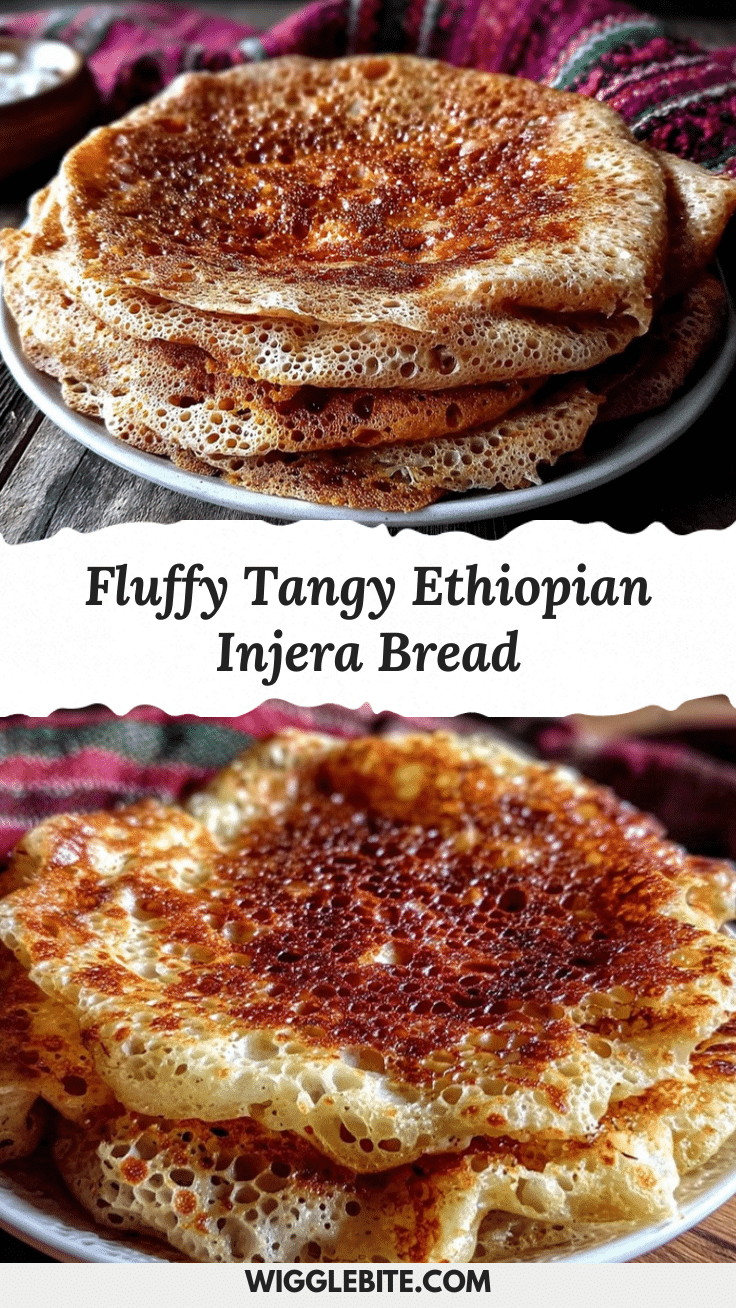
Fluffy Tangy Injera Recipe Perfect Ethiopian Sourdough Flatbread
This fluffy tangy injera is an authentic Ethiopian sourdough flatbread with a light, airy texture and signature tang, perfect for gatherings and everyday meals.
- Prep Time: 10 minutes
- Cook Time: 2-3 minutes per injera
- Total Time: 24-48 hours fermentation plus cooking time
- Yield: 8-10 pieces 1x
- Category: Main Course
- Cuisine: Ethiopian
Ingredients
- 1 cup (120g) teff flour
- 1 cup (120g) all-purpose flour
- 2 cups (475ml) warm water
- 1/4 cup (60ml) sourdough starter
- 1/2 teaspoon salt
- Vegetable oil or melted clarified butter (for cooking)
Instructions
- Mix the flours and starter: In a large bowl, whisk together 1 cup teff flour and 1 cup all-purpose flour. Add 1/4 cup sourdough starter and 2 cups warm water. Stir well until smooth and lump-free, about 5 minutes.
- Let the batter ferment: Cover the bowl loosely with a clean towel or plastic wrap. Set aside at room temperature for 24-48 hours until bubbles form and a sour aroma develops.
- Add salt and stir: Once fermentation is done, stir in 1/2 teaspoon salt. The batter should be pourable but thick enough to coat the back of a spoon. Add a splash of water if too thick.
- Heat your pan: Place a non-stick skillet or mitad griddle on medium heat. Drizzle a little oil and wipe excess with a paper towel. Heat to about 350°F (175°C).
- Cook the injera: Pour about 1/2 cup (120ml) batter into the pan, spiraling inward to form a 9-10 inch (23-25 cm) thin circle. Cover immediately with a lid or plate to trap steam. Cook for 2-3 minutes until bubbles form and edges lift slightly.
- Check doneness: The injera is ready when the surface is dry and spongy with light brown spots on the bottom. Do not flip. Remove carefully with a spatula and place on a clean towel or plate. Repeat with remaining batter.
- Serve warm: Injera is best enjoyed fresh but can be covered with a damp cloth to keep moist for a few hours.
Notes
Patience with fermentation is key for tangy flavor and spongy texture. Use medium heat and cover the pan to trap steam. Do not flip the injera. Adjust fermentation time and flour ratios based on climate and preference. For gluten-free, use 100% teff flour and gluten-free starter.
Nutrition
- Serving Size: One medium piece of
- Calories: 165
- Sodium: 150
- Fat: 2
- Saturated Fat: 0.3
- Carbohydrates: 33
- Fiber: 3
- Protein: 4
Keywords: injera, Ethiopian flatbread, sourdough, teff flour, gluten-free option, fermented bread, traditional Ethiopian recipe