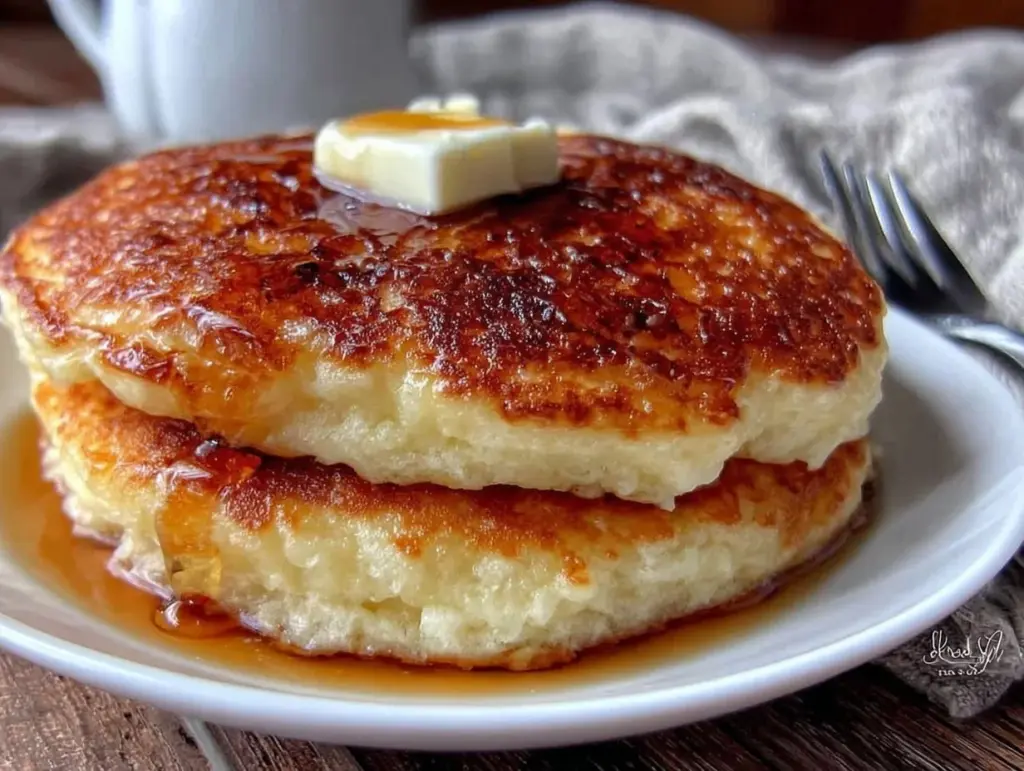
“You’re telling me no buttermilk at all?” my friend chuckled over the phone. It was a Sunday morning, and honestly, I was just too lazy to run out to the store for that one missing ingredient. But I still wanted pancakes—big, fluffy, golden discs of morning comfort. So I fiddled with the recipe, skipping the buttermilk entirely and relying on a little baking soda and regular milk instead. The skeptics in me expected a flop, but the result was honestly a surprise: pancakes so light and airy that I found myself making them three times that week.
There’s something quiet and almost meditative about flipping pancakes in a still kitchen just as the sun starts to peek in. The smell of warm batter, the soft hiss as they cook, the gentle golden bubbles on the surface—it all feels like a small, perfect ritual. These fluffy easy no-buttermilk pancakes quickly became my go-to recipe when I needed a breakfast that was both fuss-free and satisfying. No complicated ingredients, no long prep, just simple goodness that feels like a hug on a plate.
What stuck with me, beyond the texture and taste, was how this recipe erased any excuse for skipping breakfast. Whether it’s a rushed weekday morning or a slow weekend brunch, these pancakes show up ready to soothe and fuel without drama. Honestly, I think they’ve earned a permanent place in my recipe box.
Why You’ll Love This Recipe
After testing countless pancake recipes, this version stood out because it trades the traditional buttermilk for everyday pantry staples—making it incredibly accessible without sacrificing fluffiness or flavor. Here’s why this recipe wins hearts (and stomachs):
- Quick & Easy: Ready in under 20 minutes, perfect for those busy mornings when you want a comforting breakfast but no kitchen marathon.
- Simple Ingredients: No elusive buttermilk or specialty items—just what you probably have on hand like all-purpose flour, sugar, eggs, and milk.
- Perfect for Any Breakfast Occasion: Whether you’re serving a casual weekend brunch or a last-minute breakfast for guests, these pancakes fit the bill.
- Crowd-Pleaser: Kids, adults, picky eaters—they all love these pancakes thanks to their tender crumb and subtle sweetness.
- Unbelievably Delicious: The balance of baking soda and a splash of vinegar creates a light, fluffy texture that’s surprisingly close to those made with buttermilk.
This recipe isn’t just another stack of pancakes—it’s a trusted fallback for mornings when you want that classic comfort food without hunting down buttermilk. Plus, the gentle tang from the vinegar adds a subtle depth, making it stand apart from your typical quick pancake. I’ve found it pairs beautifully with homemade crispy patty pan squash fritters if you’re up for something a little savory alongside your sweet stack.
What Ingredients You Will Need
This recipe uses simple, wholesome ingredients to deliver bold flavor and satisfying texture without the fuss. Most are pantry staples, and substitutions are easy if you’re short on anything.
- All-purpose flour (1 1/2 cups / 190 g) – provides the perfect structure; I prefer King Arthur for consistent results.
- Granulated sugar (2 tbsp) – just enough sweetness to balance the batter.
- Baking powder (1 1/2 tsp) – the main leavening agent to keep things fluffy.
- Baking soda (1/2 tsp) – works with vinegar to create extra lift and tenderness.
- Salt (1/4 tsp) – enhances flavor and balances sweetness.
- Milk (1 1/4 cups / 300 ml) – whole or 2% milk works best for richness; dairy-free alternatives like almond milk are fine too.
- White vinegar or lemon juice (1 tbsp) – the acid that reacts with baking soda, replacing buttermilk’s tang.
- Large egg (1, room temperature) – adds moisture and helps bind the batter.
- Unsalted butter (3 tbsp, melted) – adds richness and helps with browning; swap with coconut oil for dairy-free.
- Vanilla extract (1 tsp) – optional but highly recommended for a warm, inviting aroma.
Sometimes I toss in a pinch of cinnamon or nutmeg for a little seasonal twist, especially when I’m craving those cozy fall vibes. And if you’re short on fresh eggs or butter, just remember the texture might shift slightly but the pancakes will still turn out tasty.
Equipment Needed
- Mixing bowls: One medium and one small bowl for wet and dry ingredients.
- Measuring cups and spoons: Accuracy makes all the difference in pancake fluffiness.
- Whisk or fork: For mixing the batter smoothly without overworking it.
- Non-stick skillet or griddle: A flat surface with even heat distribution is key. I’ve used both a cast iron skillet and an electric griddle; both work great as long as it’s preheated properly.
- Spatula: A thin, flexible spatula helps flip pancakes gently without deflating them.
- Ladle or 1/4 cup measure: For portioning batter evenly—helps keep pancakes uniform in size.
If you don’t have a griddle, a heavy-bottomed non-stick skillet is your best bet. Be sure to keep it at medium heat; too hot and the outsides burn before the centers cook through. And if your spatula’s edges are too thick, flipping might get messy—something I learned the hard way!
Preparation Method
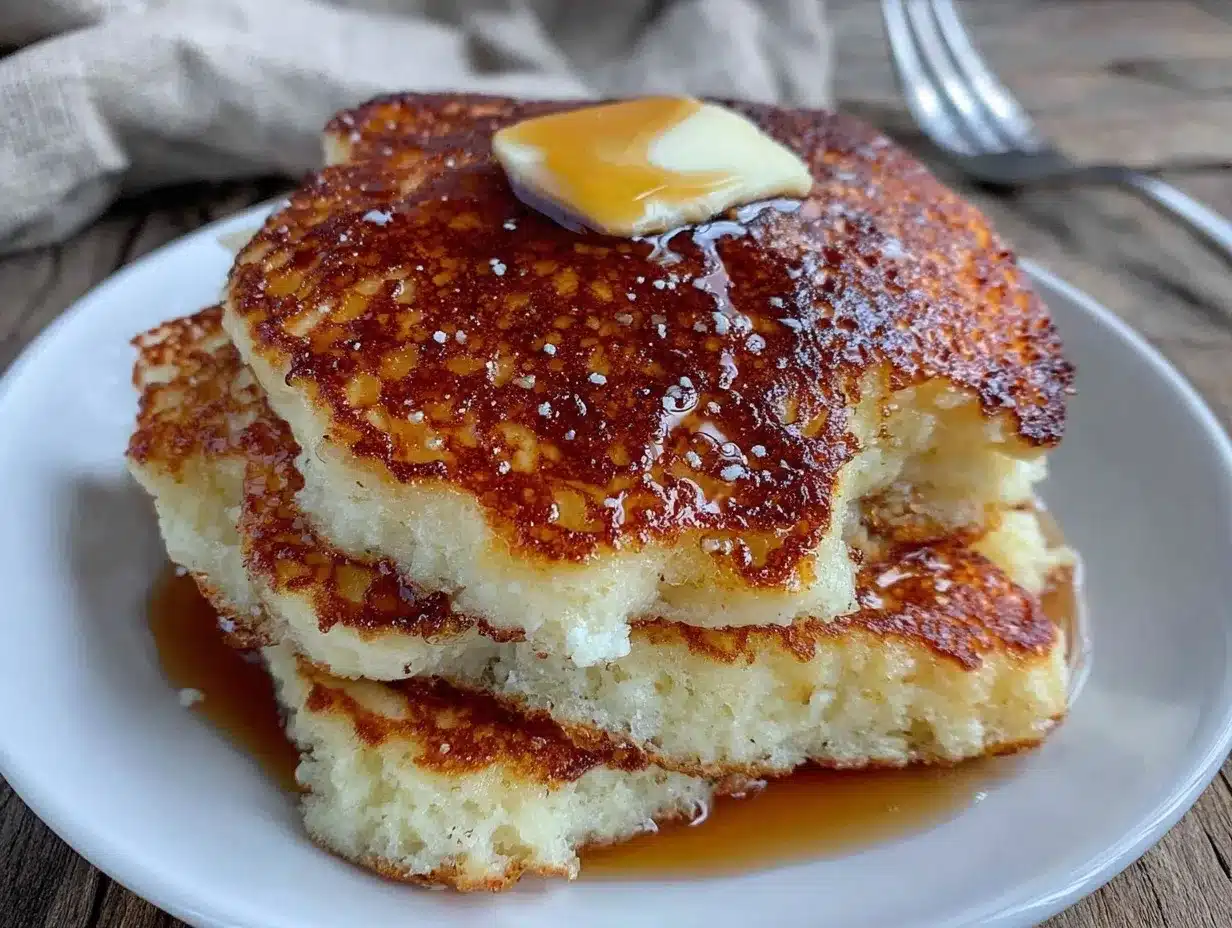
- Mix the acid and milk: Pour 1 1/4 cups (300 ml) of milk into a bowl. Stir in 1 tablespoon of white vinegar or lemon juice. Let this sit for 5 minutes to curdle slightly—this creates your no-buttermilk substitute.
- Combine dry ingredients: In a medium bowl, whisk together 1 1/2 cups (190 g) all-purpose flour, 2 tablespoons sugar, 1 1/2 teaspoons baking powder, 1/2 teaspoon baking soda, and 1/4 teaspoon salt. Give it a good mix so everything’s evenly distributed.
- Mix wet ingredients: To the milk mixture, add 1 large egg (room temperature), 3 tablespoons melted unsalted butter (cooled slightly), and 1 teaspoon vanilla extract if using. Whisk gently until combined.
- Combine wet and dry: Make a well in the center of the dry ingredients and pour in the wet mixture. Stir just until moistened—batter will be lumpy and that’s perfectly fine. Overmixing can toughen the pancakes, so keep it loose.
- Preheat your skillet or griddle: Warm over medium heat. You can test by sprinkling a few drops of water on the surface; if they dance and evaporate quickly, it’s ready.
- Cook the pancakes: Lightly grease the pan with butter or oil. Using a 1/4 cup measure, pour batter onto the hot surface. Cook for 2-3 minutes, watching for bubbles forming on top and edges looking set. Flip carefully and cook another 1-2 minutes until golden and cooked through.
- Serve warm: Stack pancakes on a plate and add your favorite toppings right away.
Pro tip: If you’re making a big batch, keep cooked pancakes warm on a baking sheet in a 200°F (95°C) oven. This also helps them stay fluffy without drying out. I’ve burned a few by rushing the flip, so patience here really pays off.
Cooking Tips & Techniques
Getting fluffy pancakes without buttermilk is all about balancing acidity and leavening. Using vinegar or lemon juice with baking soda mimics buttermilk’s role, giving you that signature lift and tender crumb. But timing and technique matter too.
- Don’t overmix: Lumpy batter is your friend. Stir until just combined, or you’ll end up with tougher pancakes.
- Temperature control: Medium heat is ideal. Too hot, and pancakes burn outside with raw centers inside; too low, and they turn dense and pale.
- Use fresh leavening agents: Baking powder and soda lose power over time. If your pancakes aren’t rising, check those expiration dates.
- Resting the batter (optional): Letting it sit for 5-10 minutes before cooking can improve texture, but it’s not mandatory.
- Flipping is an art: Flip only once when bubbles start popping and edges are dry-ish. A thin spatula helps keep the pancake intact.
I remember trying to rush pancakes when kids were hungry and ended up with a pile of flat, chewy discs. Since then, I give the batter a quick rest and the pan the right heat. It makes a world of difference. If you want to get fancy, add a dollop of whipped cream or some warm maple butter on top for a little extra indulgence—a trick I borrowed after making fresh peach cobbler that had me swooning.
Variations & Adaptations
This basic recipe is a fantastic canvas for customization. Here are a few ways I’ve adapted it:
- Gluten-Free: Swap all-purpose flour for a gluten-free blend. Add a teaspoon of xanthan gum if your blend doesn’t already contain it for better structure.
- Vegan Version: Replace the egg with a flax egg (1 tbsp ground flaxseed + 3 tbsp water) and use a plant-based milk with apple cider vinegar instead of dairy milk and vinegar.
- Flavor Boosts: Fold in fresh blueberries, chocolate chips, or a handful of chopped nuts before cooking for added texture and taste.
- Spiced Pancakes: Add 1/2 teaspoon cinnamon or pumpkin pie spice to the dry ingredients for a cozy flavor twist.
- Thinner Pancakes: Add an extra 2-3 tablespoons of milk to loosen the batter if you prefer crepe-like pancakes.
One favorite variation I tried recently was adding a swirl of homemade blueberry compote inside the batter before flipping—total game changer for weekend mornings. For a heartier meal, pairing these pancakes with savory sides like the crispy cast iron breakfast hash makes for a satisfying brunch feast.
Serving & Storage Suggestions
For serving, these pancakes are best enjoyed warm and fresh right off the griddle. Top them with classic maple syrup, a pat of butter, fresh fruit, or a dusting of powdered sugar. For a bright contrast, dollops of Greek yogurt or a drizzle of honey work beautifully too.
If you have leftovers (which is rare because they disappear fast), store them in an airtight container in the fridge for up to 3 days. To reheat, pop them in a toaster or warm them gently in a skillet to bring back that fresh-off-the-griddle texture.
For longer storage, freeze pancakes in a single layer on a baking sheet before transferring them to a freezer-safe bag. They’ll keep well for up to 2 months. Reheat straight from frozen in a toaster or oven for convenience.
Flavors actually deepen a bit after a day, so if you’re prepping ahead for a brunch, letting the pancakes rest wrapped in foil at room temperature for an hour can help meld the flavors without drying them out.
Nutritional Information & Benefits
Each serving (about 3 pancakes) provides roughly 280-320 calories, depending on the milk and butter used. These pancakes are a balanced source of carbohydrates and protein thanks to the eggs and dairy, offering a good energy boost to start your day.
Key ingredients like eggs supply essential amino acids and choline, supporting brain health. Using regular milk adds calcium and vitamin D, important for bone strength. Opting for whole grain or gluten-free flour alternatives can raise fiber content if desired.
This recipe is naturally gluten-free adaptable and can be modified to be dairy-free or vegan, making it flexible for various dietary needs. Just watch for allergens like eggs and dairy if serving to sensitive guests.
Conclusion
Fluffy easy no-buttermilk pancakes are proof that you don’t need fancy ingredients or complicated steps to create a truly satisfying breakfast. This recipe has become a quiet favorite in my kitchen because it’s reliable, forgiving, and downright delicious every time.
Feel free to tweak it to match your taste—whether that means adding fresh fruit, spices, or making it vegan-friendly. What matters is the joy of sitting down to a warm stack that feels homemade and inviting.
If you try this recipe, I’d love to hear how you jazz it up or what toppings you prefer. Sharing those small discoveries is what makes cooking so fun! Here’s to many cozy mornings filled with the smell of pancakes and the comfort of good food.
FAQs
Can I use regular milk instead of buttermilk in pancakes?
Yes! This recipe uses regular milk with vinegar or lemon juice to mimic buttermilk’s acidity, creating fluffy pancakes without needing the real thing.
What if I don’t have vinegar or lemon juice?
You can omit the acid but expect slightly less rise and fluffiness. Alternatively, using yogurt or sour cream can also substitute for buttermilk in many pancake recipes.
How do I store leftover pancakes?
Store them in an airtight container in the fridge for up to 3 days or freeze for 1-2 months. Reheat in a toaster or skillet for best texture.
Can I make the batter ahead of time?
It’s best to cook pancakes soon after mixing to get the fluffiest results, as the baking soda reacts quickly. If you must wait, keep the batter refrigerated and give it a gentle stir before cooking.
How do I get pancakes extra fluffy?
Use fresh baking powder and soda, don’t overmix the batter, and cook on medium heat. The reaction between the acid and baking soda is key to lightness.
Pin This Recipe!
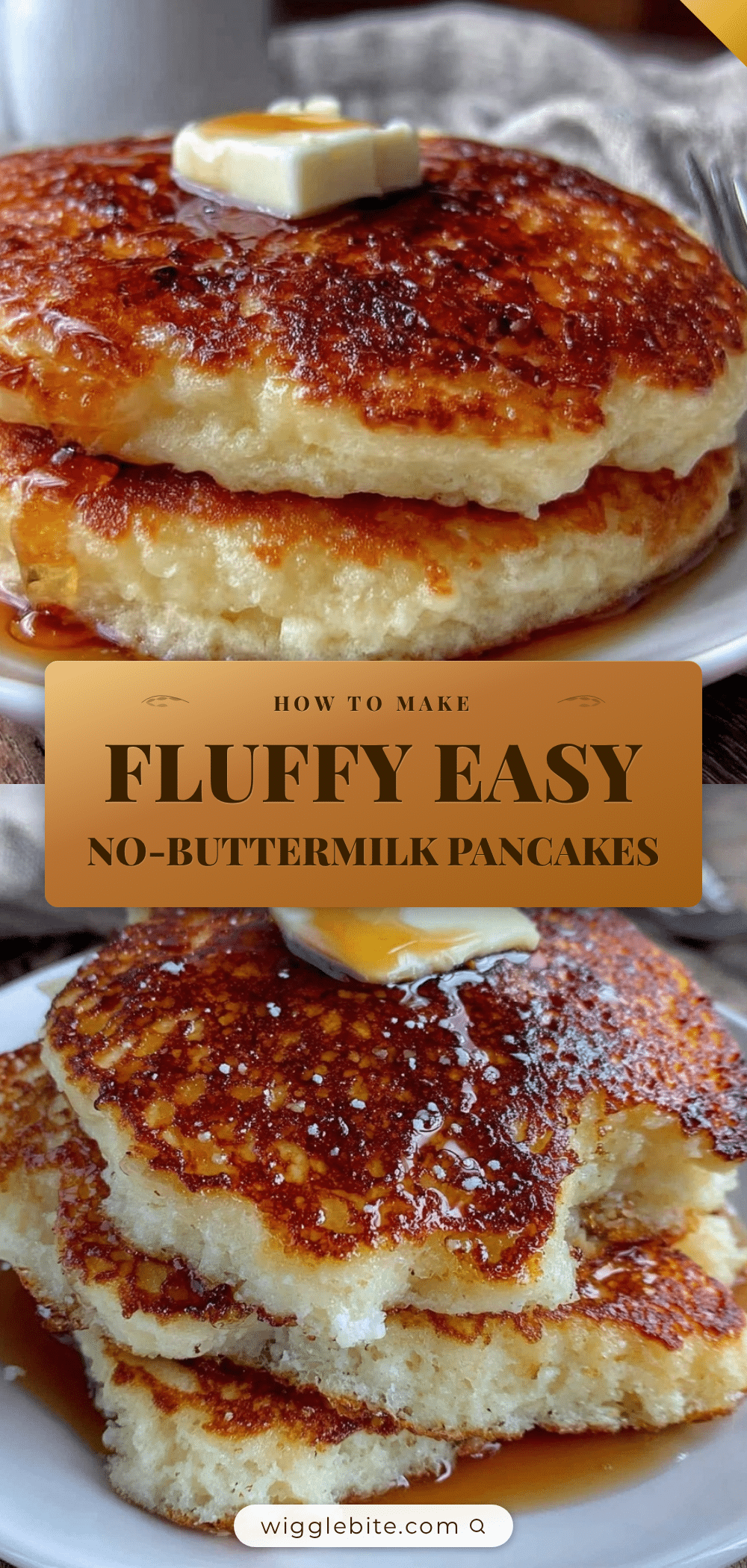
Fluffy Easy No-Buttermilk Pancakes Recipe for Perfect Breakfasts
A quick and easy pancake recipe that skips buttermilk by using regular milk and vinegar, resulting in light, fluffy, and delicious pancakes perfect for any breakfast occasion.
- Prep Time: 5 minutes
- Cook Time: 10-15 minutes
- Total Time: 15-20 minutes
- Yield: About 9 pancakes (3 pancakes per serving, 3 servings) 1x
- Category: Breakfast
- Cuisine: American
Ingredients
- 1 1/2 cups (190 g) all-purpose flour
- 2 tablespoons granulated sugar
- 1 1/2 teaspoons baking powder
- 1/2 teaspoon baking soda
- 1/4 teaspoon salt
- 1 1/4 cups (300 ml) milk (whole or 2%, dairy-free alternatives like almond milk are fine)
- 1 tablespoon white vinegar or lemon juice
- 1 large egg (room temperature)
- 3 tablespoons unsalted butter, melted (or coconut oil for dairy-free)
- 1 teaspoon vanilla extract (optional)
Instructions
- Pour 1 1/4 cups (300 ml) of milk into a bowl. Stir in 1 tablespoon of white vinegar or lemon juice. Let this sit for 5 minutes to curdle slightly—this creates your no-buttermilk substitute.
- In a medium bowl, whisk together 1 1/2 cups (190 g) all-purpose flour, 2 tablespoons sugar, 1 1/2 teaspoons baking powder, 1/2 teaspoon baking soda, and 1/4 teaspoon salt until evenly distributed.
- To the milk mixture, add 1 large egg (room temperature), 3 tablespoons melted unsalted butter (cooled slightly), and 1 teaspoon vanilla extract if using. Whisk gently until combined.
- Make a well in the center of the dry ingredients and pour in the wet mixture. Stir just until moistened; batter will be lumpy. Avoid overmixing.
- Preheat your skillet or griddle over medium heat. Test by sprinkling a few drops of water on the surface; if they dance and evaporate quickly, it’s ready.
- Lightly grease the pan with butter or oil. Using a 1/4 cup measure, pour batter onto the hot surface. Cook for 2-3 minutes until bubbles form on top and edges look set.
- Flip carefully and cook another 1-2 minutes until golden and cooked through.
- Serve warm with your favorite toppings.
Notes
Do not overmix the batter; lumpy batter is ideal. Use medium heat to avoid burning. Fresh baking powder and baking soda ensure good rise. Let batter rest 5 minutes if desired. Keep cooked pancakes warm in a 200°F (95°C) oven if making a large batch.
Nutrition
- Serving Size: 3 pancakes
- Calories: 300
- Sugar: 6
- Sodium: 350
- Fat: 12
- Saturated Fat: 7
- Carbohydrates: 38
- Fiber: 1
- Protein: 7
Keywords: pancakes, no buttermilk pancakes, easy breakfast, fluffy pancakes, quick pancakes, homemade pancakes